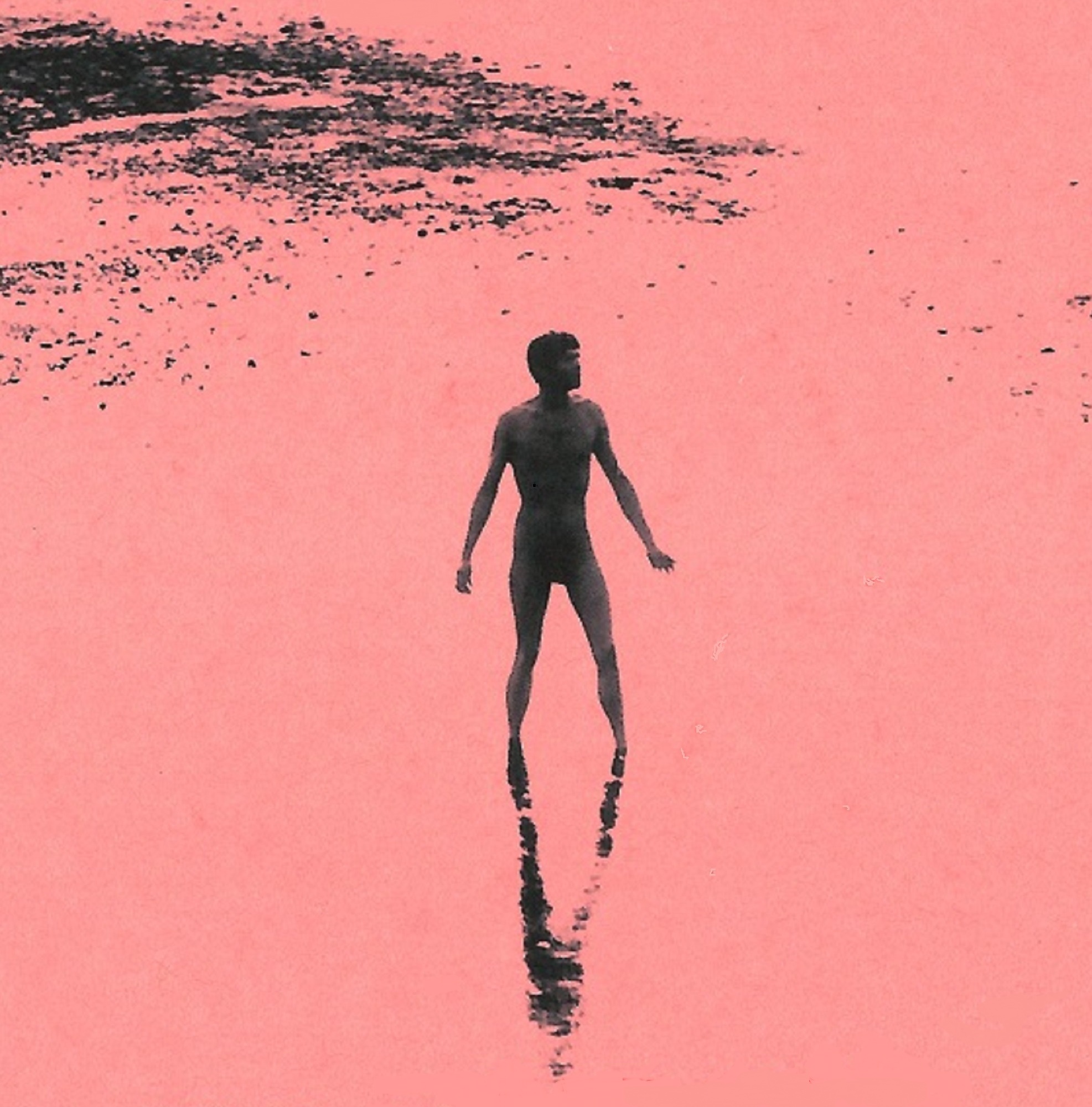
Aaaaaaaaaug! Alala! Eleleu!
Amidst the rhythmic whoosh of wooden oars, our sinews ache and our arches crack. Our skin is the color of shoe leather. We be drenched in sweat. Our breastplates are stacked in the bow, row, row, row your penteconter, the air be pungent with the smell of raw fish and the seagrass which sustain us. Captain’s log, day 43 of the Trojan campaign. Having left our dear home port of Lamentus, we are sailing in three leaky galleys. War canoes, built for ramming, they hold fifty rowers to a ship, 25 men on each side.
Bail, bail, bail your war canoe!
My name be Lysander, called “Liberator” by all and sundry. Bearer of a red beard and with a temper to match, I am a tiresome warrior, leading a desperately merry band of mariners.
Beaching our craft in the Bay of Troy, we decide on a stratagem: We shall build a wooden structure as a seeming gift to the Trojans. “Let it be the figure of a pig!” declares Artemis, my second in command. A strapping good fellow, tall, black-haired and muscular, he is the epitome of a Greek warrior. Although we are all dark of hair, he has baby blue eyes whose glance penetrates to one’s very soul. His people be hill folk.
“No pigs!” scoffs Pylon, our ship’s carpenter. Small and gnarly, he can crawl into the smallest spaces onboard an ocean-going craft. “Abdullah the one hump camel is the obvious selection,” he insists. “An almost mystical beast of burden with an aristocratic bloodline.”
There are gossips who claim Pylon is tainted with Egyptian blood, but I know the truth of it: Once upon a time, he served on a warship plying the Nile Valley.
“Nonsense!” calls Flavius Octavius in his usual jolly fashion. As squat and round as a barrel, dressed in fine armor, he represents the Emperor. That gives him and his family back home plenty to be jolly about. He even speaks with the upper-class accent of the Aegean landowner. Just hearing those soft vowels puts my teeth on edge. “It shall be Pegasus the horse,” he snorts, snapping his fingers as if the choice were self-evident.
“I know what I am, but what are you?” I joust.
“I am Octavius Flavius, voice of the Emperor in all things Trojan,” he replies. He is also in charge of the second boat in our fleet, a secure position.
“Well… well…” I sputter. Such a nasty fellow! Unspeakably nasty. I choose to ignore him. His time will come, I feel sure.
Suddenly it is a free-for-all. Like in the children’s tone poem Old Horatio’s Farm, the men want Clucko the chicken who crossed the road! They want Quack-Quack the duck, Cackle-Cackle the turkey, Caw the crow, Bessie the moo-moo cow, even Weasel the polecat who hardly makes a sound.
“Silencio! Enough!” I scream, ready to pull out my hair. “It is I who decide and I say it shall be a majestic rendition of Ursula the Bear.” Being a very stable genius, my men tremble before me, burrowing their heads into the sand and congratulating themselves on spending time in my company.
Imagine a city state where every man can choose to be a warrior or not. Such a society would fall in a single battle! Not so my crew, who are indentured for life… or as long as fate and the battlefield allow.
Leaving Pylon at his lathe, I busy myself subdividing the men into phalanxes. When I return, Ursula the Bear has been cast in a peculiarly equestrian mold. “Wha’ happen?” I demand, irritated by the smirk on Flavius’ fat face.
“Difficult to say,” claims Pylon sheepishly, refusing to meet my eye. “Sometimes the grain of the wood goes in a different direction than originally intended.” He shrugs, staring at the sand.
“Proceed!” I command, and in an undertone, I add “I shall deal with you later, dear Pylon!”
Pylon fashions the equestrian likeness from driftwood and planks of cedar of Lebanon stowed in the bowels of our vessels for just such an eventuality. The man has an eye for three-dimensional composition.
Vigorously waving away gnats, I use the pointy end of a stylus to check off the boxes of the ship’s manifest on a brown clay tablet. It is our manifest destiny to plunder and utterly destroy the Trojans. I admit that we had a Memorandum of Understanding with those peeps, but as far as I’m concerned, it wasn’t worth the clay tablet it was imprinted on. Creating a Board of Peace, the Trojans demanded the complete demilitarization of the Ionian Sea. Such hogwash!
Pylon’s creation measures 15 by 20 cubits. Our subterfuge depends on appearances. The horse, although flimsy, is anatomically correct in every detail. Meticulous workmanship, its staff of life stands rigidly at attention. Our horsey gnashes its teeth and foams at the mouth. It even smells of horse dung.
Alas, the first to fall victim to our Trojan steed is its creator. Whipped into a frenzy, draped over his lathe, poor Pylon expires from his exertions there on the golden brown beach in the Bay of Troy. (Some say he was knifed in the back.)
As we throw his body, weighted with stones, into the depths, I declare: “With wounded pride, aching heart and shrunken limb, do I express regret at the departure of a knight of woodworking and a benefactor to all humanity. His hands made quick work of a meal. He tied a mean ship’s knot. He varnished skiffs with mountainous majesty. Even when chopping off the heads of Scythian prisoners with a battle ax, Fita known as Pylon none-the-less was a veritable treasure trove of carpentry lore and equestrian beauty tips, expounding gratuitously on all nature of the skeletal form. One in whose cleverness, deeds and cuneiform tailings we find tremendous consternation.”
“Legion!” shout the crew as if one man. “Illegitimi non carborundom. Lamentus forever!”
I have the men rub oil of stinking nightshade onto their arms and chests to induce a state of blind battle fury. The smell of the oil alone can turn away a rabid dog at 50 paces. “We are not here to praise the Trojans,” I counsel the men, seated around me on the sand. “We don’t need no Trojans, we can take their lamp oil out of the ground without them. Troy has been ripping us off for a very long time on trade and they have treated us very badly. Now they have instigated a price war on olive oil, pitch, kohl and myrrh. And don’t even get me started on the price of silver! We are here to beat the living shit out of them.” A wild look in their eyes, my men shall not spare the sword.
At dusk, a band of five of us, secret warriors, arm ourselves. While our shipmates cake us in mud, I note that it is high-end mud, far superior to anything you will find on the streets of Lamentus. Stealthily, we creep inside our giant, elegant edifice. At the shoreline, our fleet of three ships casts off, as if abandoning the current venture for parts unknown.
A Trojan is no one’s idea of a wuss. Not an hour passes but from our confines in the belly of the beast, we hear a great hubbub ensue among the Trojans. “It’s a trap!” shouts one in their Luwian tongue. Anatolian scoundrels, they sound drunk. Winemakers, theirs is a grape society.
“Wicked sorcery,” insists another.
“Never look a gift horse in the mouth,” suggests a third, whose voice I recognize as Trumpeto, a builder and developer of some renown in the known world.
With that, we feel ourselves being dragged a great distance. It is a 120-cubit elevation gain from the shoreline to the gates of the city and we feel every bump in the road.
II
“Surely Poopsie must be blessed by the gods,” exclaims Diana from a perch in the clouds of Mount Olympus. A chillier deity, with every word she spake, ice crystals fall from her fulsome mouth.
“If you mean the Liberator, no way will I give my blessing to such a renegade half-breed,” thunders Zeus, lightning bolts flashing from his eyes. “Remember well that the mother of Lysander was a sphinx!”
III
When night falls, we peek from the cleverly concealed hatch. The moon is shining bright. Our horse lies just inside the gates. Gods of Mount Olympus, bring on the cray-cray! Unsheathing our bronze swords, we charge into the courtyard, running amok, slaying Trojans. “Come!” I shout to those Greeks nearest me. They come and we open the gates to the rest of our motley crew. Explosively, propulsively, we geeks charge hither and yon in a great and untimely massacre.
Catapulting the bladders of sheep filled with burning oil, we douse the Trojans in fire.
Artemis brings me the current leader of the Trojan Army. Since Aeneas is dead, young Paris has taken over. A worthy opponent, he is little more than a boy. He speaks softly and carries a big walking stick. “Oh!” he says, looking like he just awoke from a mighty hibernation. “Is it you Greeks again? Do you still want to negotiate terms?”
“You treat us like a Third World country! Save your breath,” I suggest, running a sharpening stone along the blade of my sword.
“Yes,” he agrees, wearily shaking his tousled head. “Talk, talk, talk, but it’s all Greek to me.”
“By the rules of warfare, we need to let him go,” Flavius Octavius points out.
I am expecting this. The leader of the opposing army is to be spared so he can report his defeat to their emperor. “Let him escape!” I command.
“I have not surrendered!” Paris protests.
“No difference! Make your escape,” I command, turning my back on him.
The battlefield is a bloodbath. He does well to abandon it.
In an aesthetically terrifying herdlike logic, we leave the city of Troy in ruins, no longer habitable, stray dogs dotting the burned-out hulk of its once-glorious walls. If they ever raised a white flag amidst the carnage, we never saw it. “Take me with you, take me with you,” wail cinder-charred maidens, as spectral as wraiths. Alas, women’s fruitful bellies can foster a new generation of Trojans for us to fight. We do not want that. Instead, although Herculean be the task, we put all living things to the sword. So we never need come back here to deal with an unfinished task.
As we teach our troops: Act in haste, repent at your leisure.
Heroic is the only word to describe us. Sleeping on a bed of pine needles tends to build character. Perhaps we could have spared some lives, perhaps not. We didn’t come here to negotiate with those people. Once we get the machinery up and running, we are a virtual supply chain of death: Kill the enemy soldiers, massacre the civilians, swing back around and annihilate the livestock, burn the crops, level the city to the ground and then pulverize the landscape. Every port of call is like a wash, rinse, repeat cycle. Entire peoples have fallen before our wrath.
You cannot have an advanced civilization without plunder. We are a hegemony and political arbiter of taste the likes of which no one has ever seen before. Katastrophē be our watchword. We annihilate our enemies, then deny, deny, deny! The best of the beast, ain’t we sweet? Periodically, we make war across Asia Minor and North Africa. Not simply angry, we are furious, our blood lust running over once a month like clockwork.
IV
Let’s talk. There is much to say about the quest to return homeward after experiencing the perilous calamity of war. Challenges linger. And here is where I shall tell the tale, making my little brags. Twine an amulet about my wrist and hang an albatross about my neck! My ship is named after Daphne my queen, the memory of whom has been blighted by the misery of war, the details of her face a blur, her voice barely a whisper.
Nostalgia makes the past seem better than it was and the present seem worse than it is.
A castle on a hill, a whip hand like thunder, my loving wife waiteth in the glistening city of Lamentus, impatient over my less than speedy, somewhat convoluted journey home. A fine and regal woman, she be over there, separated from us by a body of water teeming with sea cows and water nymphs. And, of course, the entire world recognizes our national colors and the slogan “War but More So” painted in hieroglyphs on the sides of our ships. As a modern city state with artisans, merchants, serfs and slaves, we try to keep up. No deposit, no return, thank the gods the sea be flat. Otherwise, we might sail in circles forever. As I ponder weak and weary, I am as Moses wandering in the desert of my celestial sadness. Such is the price which one pays in blood and treasure for offending the gods. The glowering image of the Emperor is engraved on our very souls.
We tour many wonders of the world, admiring the handiwork of foreign artisans: From the Hanging Gardens of Babylon to the Great Pyramid and Great Sphinx of Giza to the walled cities of the Canaanites and the Ziggurat at Ur, we see them all, often without meaning to, pricing everything for quick sale. “We’ll rush right home,” I assure my men, “as soon as we see just a few more things. Don’t forget, we are in a hurry to build a triumphal arch as soon as we reach Lamentus. Maybe not today, but soon.”
The thought that Father Time will erode all these treasures into dust fills me with dread.
Onward! My dear wife Daphne awaits, teets dipped in butter!
V
But even should we intend to hasten home, such is not in the cards. While the Emperor and his sons grow rich on coinage, we poor sods are blown hither, thither and yon. Indeed, a roll of life’s dice— not sold in stores nor stored in souls— puts us on the leeward side of still another interesting misadventure. This one involving a large, bearlike monster.
We beach in the bay of a foreign archipelago. If ever anyone had told me that I would be swimming with monk seals off the black sand of a volcanic islet, I would have demanded my money back. Hark! Enough loitering. Let us proceed.
We march up the trailhead from the shore in a right’em, tight’em formation, the men swaying their hips rhythmically as they sing “From the urinals at Giza to the outhouses of Nineva, any leak is a good leak, any dump a pleasure, mind, body and soul!”
We are well impressed by the fine sheep populating the place. No mopey Greeks here! Practitioners of inter-species intercourse, we shag some of the sheep. My men call out and we spelunk a cave carved out of sandstone by the forces of nature. Therein we find a hearth and a bed made of sheepskins. Slaughtering a sheep, we fry its shanks. Feasting on mutton and sheep’s milk, we soon curl up for a snooze. Only to be awakened by a hideous, one-eyed one-horned flying purple people eater named, outlandishly, Polyphemus.
“What are you doing inside my abode?” he demands, towering above us, blinking comically with his single eyeball. “Who gave you permission to trespass on my domicile?” he huffs, trying to guilt-trip us. “Are you migrants? There is no work for you here. My border is closed!” A cyclops, nature has been unkind toward him: Poor chap has only a single eye. “What is that awful smell?” he asks. “Don’t you ever bathe?”
He gets especially upset when he realizes that we have killed one of his precious sheep! Well, hell, a man’s gotta eat.
“Uh, boss!” whispers Artemis, poking me in the side to indicate a blackened forge in the corner, its coals still sizzling hot.
“Not now, Artemis!” I hiss. And to the giant I say: “We are the great and kindly warriors who laid waste to Troy, if you’ve heard of us.” I unsheathe my sword, whom I have named Phoebe, just in case.
“Um, bossman!” babbles Artemis sotto voce. “Not to put too wide a stripe on it, but I recognize this forge from epic tales of my youth. Take a gander! This fellow could well be the master craftsman who forged the thunderbolt of Zeus and the trident of Poseidon.”
“Well, so be it,” I gulp, declaring “We are the greatest warriors in all of history. No one has ever before seen the likes of us.” Although even I must admit that my voice most closely resembles the squeak of a harvest mouse.
One cannot have everything!
“I want you out of my cave,” thunders the giant.
“In the land of the blind, the one-eyed man is king,” I remind him.
“Scram!”
Did I throw hot coals into the eye of the one-eyed giant? Did I ever! After which we make our escape, sailing toward a sulfurous sunset as red as Hades.
VI
Far from home, our travails are far from over.
We are constantly patching the boats. Maritime vessels don’t come cheap. Each one costs a pretty drachma. It’s not like we are rolling in silver bullion, although I will admit that we use plundered gold as ballast in the front and rear of the boat. (Shhhh! It will be our little secret.) We smear pine resin on the sides of our ships to make them watertight. We harvest hemp to fashion twine, drying and smoking the leaves around a campfire in the evenings.
I put the few of my crew who are literate to work translating Luwian hieroglyphs found among the remnants of coastal settlements. Many of the hieroglyphs look pornographic in content. (At least we hope this shall be the case.)
At low tide on still another Mediterranean paradise, we beach and make merry, building crackling bonfires of palm fronds upon the sand. Dancing, we sing battle hymns, called paeans, to the god Apollo. Throwing sun stones to predict our future, I make my pitch. “This is a fine island to construct a beachhead,” I propose, infallible as always. “Just look at the lush vegetation. We could build cabins here and sell timeshares.” This announcement is met with a stunned silence, but grudgingly, the men line up behind their commander.
“I would say that our story is going to last thousands of years,” I assure them. “Yes, three thousand years from now, the Journey of Lysander & Crew will be remembered and cherished in epic poem. How we laid waste the Trojans, hornswoggled the cyclop and brought honor upon the Legion. If and when we reach Lamentus, I promise you that we shall demand financial compensation commensurate with the scale of our task. This is one of the better expeditions. No doubt, this tale shall last a long, long time.”
An amazing creature comes down the beach to meet us, a divine woman dressed in brown leather sandals and inky black fishnet, her generous nipples peeking out between the strands. She bears a Medusa head with writhing snakes for tresses. “Kneel…” she commands, and we cannot but obey. Leading us into the palm trees, she invites us to partake of a splendid repast of fruits and veggies. We roast geckos over an open campfire. Gobbling the food, oblivious to my entreaties, a third of my crew soon find themselves transformed into pigs!
Ah, Circe, you social witch, you haruspex, bringing out the swinish behavior in my men with a single wave of your white porcelain hand. “A bird in the hand is worth two dead canaries in a goldmine,” you chant, casting your green-eyed spell, thick with ocean brine. “A stitch in time saveth nine.” You be Penus Girl, a hermaphrodite. A hard taskmaster, each of us not turned to swine must pay homage to you by buggering first a sheep, then each other. “You sailors are all the same,” you claim. “You talk a good game, but you will poke anything that moves.” Mean temptress, what hand is this journeying up my thigh only to arrive at the rock-hard epiphany of my aching manhood?
Practicing her 69’s, she whacks me off, warning me of the danger lurking ahead: Sea sirens whose velvet song lures foolish sailors into their clutches. Foundering their ships upon the rocks, the sirens drown sailors as if they be nought but kittens.
“Oh, I don’t want that,” I assure her. “Anything but that!”
Following her instructions, I have my men stuff their ears with wax. Curious, I clean the wax out of my ears and have the men lash me to the mast with thick wet ropes of hemp. As the hemp dries, it shrinks, imprisoning me to the mast. Some may accuse me of titillation, but I consider this a case of ethnological research of the highest order. Having sung in boys’ choir in my youth, only I can truly appreciate every nuance of their musical composition: melody, rhythm, beat, tonality, octave, regional accent, arrangement, lyrics and mix. Singing a cappella, their work is presented unadorned.
Sailing boldly forth, in churning waters, we see them, mermaids as thin as ghosts, keening above the roar of the waves.
“These boobs are made for gawkin’ and that’s just what you’ll do,” they sing. “One of these days, these boobs are gonna gawk all over you!”
I am captivated! I find their lethal song immensely attractive. The ethnicity of their composition. The etymology. My pulsing organ all but ripping a hole in my cloak, I consider the sheer gusto with which they sing. I give ’em a nine. They would knock down any song contest, no holds barred. “UNTIE ME! UNTIE ME!” I command, mouth wet with drool, but alas, my shouts fall on deaf ears. It is all the men can do to sail the warships past the rocks.
Danger averted, my heart is forever broken by their siren song.
It gets worse! Bathing solo one morning in pounding surf while my men catch up on their sleep, a sprite appears among the waves. She has tiny breasts and bare feet. Feeling sure that she must be an illusion, I accost her. “Who be you?” I demand.
Giggling behind her hands, she says “Calypso, daughter of Belafonte!” Her tiny nails are bitten to the quick. Inviting me to stroll along the beach, she regales me with tales of Gilgamesh, the legendary Sumerian King of Uruk.
“And you say you knew him?” I ask, intrigued.
“A warrior, like yourself,” she murmurs in a voice as soft as waves lapping the shore.
She is a mystery wrapped inside a quandary planted in an enigma. I am captivated by her pointy little teeth. Leading me to a lagoon filled with lotus blossoms, she bids me partake. Nibbling on the petals, I find myself transported above island and sea, looking down on the Earth as if I am a god on high or a seagull. Perhaps you will think it foolishness, but the truth is, I sent my men ahead to visit Giza and Ur without me while I myself hung around for months at a time with dear little Calypso dancing before me in the moonlight.
It feels good to be away from home for awhile. In the city of Lamentus, graven images of the Emperor grace every official building. If you find yourself in the wrong place at the wrong time, you can be arrested for sneezing in public. Toxic masculinity, roving bands of royal troops roam the streets, snatching anyone lacking credentials, and Zeus help you if you are not Greek. They’ll deport you!
In my dealings with the Emperor, I always come up a little bit short. It feels mo’ better that I spend my days here on a festive isle with my sweet barefoot sprite. Her voice caresses me as gently as a tsunami. Her luminous eyeballs really put me in the zone. Those lotus petals plucked from her soft fingers totally fry my brain. Zzzzzz!
She is also my spirit guide. She teaches me to stand in the surf feeding apples to unicorns. She leads me to magic waterfalls. “If you gaze long enough into the waterfall,” she instructs, “every act of sexual transgression will appear from the deep fog of memory. ‘Oh, yes,’ you will groan, ‘I remember.’ Behold! It is so.”
She offers me immortality, but I choose to leave. I cannot even explain it. What was I thinking??? Hubris! I still wanted to put my stamp on the known world, leaving a chronicle of my adventures and a testament to my fortitude, whatever that means.
When my men come back to get me, I am ready. They bring the latest Egyptian astronomical charts in cuneiform. Venus is in conjunction with Mars.
VII
We sail as far into the setting sun as we dare.
We put ashore, we know not where.
What is this time, what is this place?
We do not see a friendly face!
Cabalistic, cannibalistic bands of indigenous tribes, brown-skinned and jabbering, throw spears and shoot arrows at our ships, repulsing the invader.
Finally, on a morning tide on a sun-dappled day in Fall, we land at an uninhabited stretch of coastline. Since the view goes on forever, we think it may be a mainland. “Perhaps, perhaps,” surmises Euripides, hacking with his sword at a wall of vines, “we shall uncover the Lost City of Tragemata.”
You wish!
(Tragemata is a mix of nuts, dried fruits and olives, often eaten together with wine.)
Hungry for fresh kill, we form a V-shaped formation and march through the forest banging bronze sword upon bronze shield. The ensuing cacophony flushes from the underbrush all manner of polecat, fox, possum and deer. Even a bear. Success!
Deep in a swamp, we encounter a peasant dressed in brown burlap and a floppy hat. He is walking on stilts while tending his flock. Although we are quick to challenge him, he speaks no known language, so we allow him to pass.
We provision our vessels before making to sea.
By the end of the afternoon, we even have time to chase an ibex up a mountainside, the air perfumed by purple stalks of lavender. Who knew the brute would lead us to a lair of dreaded scallywags? The gods knew!
We hold the ruffians at sword-point, but only just. “Off with their feet,” suggests Flavius Octavius, genially smiling and flashing his sword.
“They are pirates, but they were here first,” I point out, tired of the constant bloodletting.
Instead, annoyed by the scallywags’ incessant yammering, we pay them a ransom of a single silver coin for safe passage outta there.
VIII
Scum! Awakening in the morning, we are surrounded by a sea of yellow algae. Blue chunks of the sea bed float to the surface. Doldrums, there is not a breath of wind. Since nothing moves the needle, I have the men fart in unison into the sail, propelling us forward on a sea as smooth as a baby’s buttocks.
Arriving on still another distant beach, we disembark and climb toward the heavens. Ah, the joy of rock scrambling, above us only sky. The flaming orange color of autumn larches greets us in high mountain meadows awash in feral pigs and dragonflies. “Here would be a good place to establish a camp,” suggests Artemis. “We can use night soil to fertilize our crops,” he reasons.
Poor fool, so easily lured off the chosen path! If we depend upon him, we might never reach home.
The buzz of cicadas reminds us that we once again stand on dry land. Green fields of chickweed dance in the sun. The sky darkens. Gusts of wind whip the treetops. As curtains of rain march toward us, Zeus casts thunderbolts in quick succession.
Sooner or later, all of our sins wash ashore.
Hustling down the mountain and fording raging streams thick with rockfish, we arrive back at our boats only to find they have been raided in our absinthe! Oars remain and beams are shipshape, but every piece of brightly colored adornment, every bronze shield and breastplate kept in reserve, heaps of gold in bow and stern are but a memory, encased in the glowing nostalgia for that which is lost. A grimmer, grimier crew, we cast off our anger and cast off.
Navigating the Strait of Hormuz, we fall victim to the six-headed, twelve-footed Hydra named Scylla but called Shahed-238. Regrettably, slithering from her cave, she plucks two from ship A, two from ship B and two from ship C. Circe warned me of this dilemma: I must fight Shahed-238 and, at the same time, survive the whirlpool of Charwoman which sucks entire vessels deep into the ocean depths to be eaten by sharks. Sailing too close to Charwoman means losing our entire fleet and all hands, while hugging the cliff near Shahed means I lose six of my best sailors to her jaws, but save the rest of my crew and ships.
Bye, bye, stalwart comrades, your memory will forever dog our nightmares!
A much chastened and rueful assemblage of sailors rows away from this catastrophe. Giving the whirlpool a miss, we offer prayers to the God of the Sea, sacrifice a lamb to Neptune and then roast the lamb’s supple flesh for our evening repast.
For some reason the men seem restless.
“This becomes a long and arduous trek,” complains Artemis, my second in command. “We should put to a vote how best we proceed.”
“What is this ‘vote’ of which you speak?” I feel compelled to ask. “Treasonists! Has someone converted overnight our hardy band of mariners into a democracy? A debating society? What are you saying?” There on the poop deck, I place the edge of my sword against his neck, grinding my teeth in irritation. “Zeus has become a very angry god today,” I warn my men. “Test not his patience!”
“Of… of course,” stammers Artemis, “you may be of a different opinion.”
“Indeed! We shall continue under my tutelage,” I proclaim in a voice edged with iron. “Ours is a pélagos lifestyle based on the open sea, ours an act of seemingly endless seafaring.” Having defined our purpose, with a twitch of my sword, I bring Artemis’ loincloth to rest about his ankles.
“It shall be done!” he gulps, a line of sweat glistening visibly across his noble forehead.
Such is the heavy and cumbersome burden of command.
IX
Then I find reason for their unease: Upon a mysterious island where we intend to forage for food and kindling, we are met at the breakwater by one Alfrédo, a scruffy beachcomber extraordinaire who, for a payment of three obols in advance, offers to guide us around the property. “The locals are a tad chinky,” he warns,hawking up phlegm to beat the band. “You can easily end up in a cookpot full of hot water.”
Waving him away, shields and swords at the ready, we march toward the palm trees, only to be met by the Laestrygonians, a tribe of giant cannibals dressed in tatters. Many a sailor has heard of them. They are rumored to be an off-shoot of the Philistines, poor relations to Goliath. Grunting, tendrils of livid flesh hang from their maws. Accused of eating cats and dogs, the very sight of them fills us with horror.
“Now I see what ’Frédo is talking about,” I shout.
“Hurrah!” chorus my men.
“In the name of almighty Zeus, I smote thee, you bottom-feeding lowlifes!” I bellow, hacking at their leader with my sword, while my bowmen fill his chest with arrows.
Alas, in a throw of the bones, fate’s cruel turn, a cannibal’s spear pierces my breastplate and penetrates my chest. I am undone. Lying on my back, flat on the ground, I watch fluffy white clouds float by in a sky-blue sky. ’Tis then I experience an ELDV, an End of Life Dream Vision. Rising above my own inert form, I am surrounded by a rainbow of many colors. Borne to a celestial paradise in the clouds, a jumble of writhing young bodies of handmaidens sets a ringing in my ears and a tingling in my limbs. “Oh, Diana,” I groan. “Stroke again my valiant sword.” Feeling that appendage swell in length and diameter, I can only assume my wish has been granted! Stumbling to my feet, I charge the loathsome enemy in a torrent of bloodlust, etc.
Many congius of blood reside in these giants, making for a long to-do that stains the sand crimson red. We shall build no condos on this island.
Alas, a large number of my crew perish in this unexpected debacle.
Regretfully, we take all the Laestrygonians’ accumulated wealth with us aboard our remaining two ships and scarper right sharp, continuing our journey.
X
Another day, another landfall. “This isthmus is of little interest,” I inform the men. “See, most of the woodland is overgrown with knotty pine.” Still, I do send a patrol to scout south. They return empty-handed. “Sea otters, sea grape and seagulls,” they report. “Sturgeon.” Our disappointment hangs heavy upon us. No man is an island. No more spitting into the wind. Deep lines on our faces, hair bleached by the sun, every man is plagued by a five stadion stare. War is hell.
’Tis the fate of every hero to be, at some point, bored out of his skull.
The moon plays tricks. We keep sailing and sailing, but we never seem to get any closer to home. At the far end of the world, we watch as the red ball of the sun goes hissing into the ocean.
Time is eclipsed, the years progress, we become weathered vagabonds of the high seas, lusting after Ursula’s celestial body.
‘Tis well past time that we were home in our beds.
XI
The illegitimacy of our endeavors means that wherever we sail, a bad reputation precedes us. In Piraeus Harbor, a hard scrabble of Phoenicians, Philistines, Persians, Egyptians, Hittites, Babylonians and Hebrews dot the shore. As we tie up at the dock with what remains of ship and crew, Phoenicians glide past in their barque, thumbing their noses at us.
XII
Charisma maximus, I seek a soothsayer extraordinaire. Nearer to the gods than thou, I am told by Diana herself, in a dream, to make passage across the River Styx and ask the way. Creeks, streams, rivers and brooks flow into the River Styx. I pay Charon the boatman in his black cloak a single silver drachma, polished to a brilliant shine. Silent as a grave, he and I glide into Hades. Hey, it’s cheaper than a water taxi! Singeing my sandals on the embers, I use a cowhide to shield myself from the eternal flames, meanwhile seeking the advice of the blind prophet Tiresale on how best to reach home.
A frightful visage, his useless eyes glowing feverishly, skin dried like parchment, he listens to my plea. “Home is where the heart is,” he doth counsel me. “Home is close control.” 1 He urges me to make haste. He also offers me a discount on souvenirs from Hell’s gift shop: Juniper berries, known for their sharp, peppery, and slightly sweet-tart yet intensely resinous fruitiness. Scads of sacred relics. Antiquities. Little baby pitchforks.
While I am thus disposed, my starving men disobey my warning and eat the meat of the sacred cattle of the sun god Helios.
As I cautioned my boatswain Augustus Sympaticus, “If it looks like a cowbell and it rings like a cowbell, it is probably a percussion instrument in the cowbell family.”
Dire calamity strikes! Never has beef tenderloin been enjoyed at such a price! Within sight of land, a final catastrophic windstorm destroys the last of my ships and crew. And so close to home! Woe unto Lysander, his hopes dashed upon the waves. Years of treasure, many talents of loot, sink to the bottom of the sea. Shipwrecked, forlorn, I alone wash ashore, awakening bearded and bedraggled in the sand, like so much driftwood.
Stripping to my loin cloth, girding my sword in its leather sheaf upon my hip, I trudge up the embankment toward yonder fortress. Outside the walls, one look upon my strange countenance and the vassals pull me into their hut. “Beware!” they counsel me. “The queen of the castle is besieged by suitors, many in suits of armor. You look suspiciously like Lysander, once the lord of this here manor. Should you prevail, put in a good word for us,” they beseech me. Giving me food and drink, they clothe me in a gray robe. Barefoot, my weapon concealed by the fabric, I approach the guards all along the watchtower. 2
Has it truly been ten years since last I here did tread? The castle seems so much smaller than I remember it. Someone has painted the parapets blue.
What could possibly go wrong?
“Who goes there?” a guard queries in a shout.
“I am but a weary traveler, hoping for patronage from so grand a fortress,” I propose, older, colder and bolder. “I am an excellent developer of hostelries, casinos, ballrooms, boatyards, sailmaking, ship chandling, stone quarries, olive groves and the biggest oil deal in world history! Good fences make good neighbors.”
“Our border is closed! Go back where you came from, beggarman!” saith the sentinel, risk averse.
Shunned, fortunately, I know a way around the back to enter said premises via the alimentary canal of the sewage system. Wading through labyrinthine slop, I smell like a pig, but I do reach the halls of Montezuma.
I expect great things from my son Telemarketing. Revealing myself to him alone, I caution him, “Herkos odonton, keep it behind the hedge of your teeth.” He has the servants bathe and anoint me in oil. While they trim my beard and hair, he incinerates my foul-smelling sandals. Pissing money away, he provides me with a cloak of many colors worthy of a courtier.
He introduces me to the rowdy mob as an emissary of King Midas, no less. Can this possibly go right? “I see that you have filled your shelves with many kinds of gold objets d’art,” I remark, weighing a trinket in my mitt.
“Gold is the nectar of the gods,” replies Stavros Pythagorasos, Daphne’s chief suitor. Dressed sumptuously like a prince of the realm, he is one of 52 nobles sent from the neighboring city state of Dulichion in an effort to win Daphne’s favor. Showing his teeth and giving me the horns, he looks for a pretext to subvert the will of the gods: “In theory, private ownership of the means of production allows market forces to dictate the value of silver bullion,” he points out. “At least theoretically, scarcity breeds wealth.” 3 Reaching for a wooden counting board and a handful of pebbles, he makes a brief calculation and frowns.
“Every moment is a golden opportunity to turn life around,” I counter, waving a golden chalice in his direction before drinking of the wine therein. “We have all made our share of mistakes,” I confess, lopping off the head of an inattentive serving lad who is clearing dishes from the main table. His severed head rolls across the floor, leaving a trail of rich red blood, followed by an embarrassed silence.
“In my construct, the Earth is the center of the universe,” 4 Stavros replies condescendingly. Although on a mission as an official representative of a neighboring municipality, he seems to think that I am hating on him simply for lusting after Daphne. He is right. I am. “The theorem of the isosceles triangle states that if two sides of the triangle are equal in length, then the angles opposite those sides are also equal,” he points out. 5
“This be the House of Pinocchio! All is a chimera!” I yelp, but to no avail.
“Instruct thy wives and thy daughters, cast not bread upon the waters,” insists Stavros. “He who laughs last has found a different meaning.”
Ouch! In the battle of aphorisms, he is wiping the floor with me. “How Roman be your mosaics?” I demand. “How righteous be your cause? Yield, you cur!”
“The deuce, old man, now I recognize you!” he shouts excitedly, eyes bulging, hair standing on end. “You are that laggard Lysander! Best known for slaughtering civilians, but less adept when paired off against foreign troops.”
Whoa! I must admit that his description lets the air out of my sail, leaving me utterly speechless. So unfair! So unkind! So untrue!
Marching from her chambers in royal attire, Daphne pulls a short-handled dagger from her sash and impales Stavros on it. Problem solved! Grinning, she declares “Lúsate tàs leaínas. Free the lionesses! Ready the war wagons, my spouse, for I think that neighboring Dulichion must also be destroyed!”
Spewing facetious couplets in iambic pentameter, I am glad to see that I have not lost my touch. The life of the party, Telemarketing and I unsheathe our swords and make mincemeat of Daphne’s suitors.
Broken lives, broken hearts, broken promises!
“Welcome home, my king,” whispers Daphne, looking joyful. “Batten down the hatches, boys, for we shall hold a chariot race in your honor!” Embracing me amid the corpses, her breath hot and garlicky in my ear, she asks “What kept you?”
I am home.
————————————————
1 Lene Lovich song lyrics
2 Bob Dylan song title
3 Karl Marx
4 Ptolemy
5 Euclid


Leave a comment