Growing up, when things went sideways on the soccer field or in the house, we bitched. “Pasta fazoola,” we swore, meaning “everything is all messed up.” America in the 1960’s, even Polish-Russian-Swedish brats like us luxuriated in this fake molto italiano expression.
After two days and nights— 48 hours— of rain, the sun has returned and everything is slowly drying out.
Pasta fazoola!
Here in Oxburg, Maryland, I am sharing my two-story house with an insect, a hussyrsa in Swedish, a house cricket, which is all right when it’s in the basement, but I don’t like it in my kitchen where I am eating.
Pasta fazoola!
Trash collection in our neighborhood is on Mondays, whether it’s Indigenous Peoples’ Day or not. Of the two black plastic garbage bags, the trashmen have taken one and left the other. Half the garbage is still in the can, where it will sit and rot for a week until, hopefully, the truck collects it next Monday.
Pasta fazoola!
Normally, I would telephone and complain, but the last time I did that, behold, the company got pissed off enough to change the collection time curbside from 8 a.m. to 5 a.m. They now collect the garbage at five o’clock in the morning!
P-P-Pasta fazoooola!
Pasta fazool is the same dish as pasta e fagioli, which translates literally to “pasta and beans.” Popular in southern Italy, in Naples dialect it is called pasta e fasule.
Presto! Pasta fazoola!
While pasta e fagioli is served as a brothy, rustic soup, Italian-American pasta fazool is a thicker, marinara style stew.
Yummy! As we used to say, “Good at half the price.”
Kids. Go figure.
Mutte Fjutt in Uppsala, Sweden is going to telephone the ICA grocery store chain and complain that the cooking time for pasta is always included on the package in teeny-tiny print. “Why is cooking time in the smallest print on the box?” he gripes over Microsoft Teams, wearing a snazzy sportscoat and looking terrific. “Why do Putin and Trump make war when something truly importante like the cooking time for pasta is practically kept top secret?”
I love De Cecco, but when Mutte is right, he is right.
We feel this course correction in human evolution will render Mutte eligible for the Nobel Prize in Literature.
As an online influencer, I should be able to nominate Mutte for this award. Otherwise, pasta fazoola!
God help me, I’m involved with a blue-eyed blonde brat of a school girl. Hell’s bells! Mephistopheles, I teach her which of her moves will ensnare a sucker and lead him by the nose. Skin like ivory, she comes up with the stare, the smile, the pleading looks. And I say, “Yeah, that’s it! There y’ go. Perfeito. Use that look. That’s the hook. Hasta la vista, baby!”
Coaching her.
She calls it “squeezing.” She squeezes her victim like she’s a Burmese python, squeezing the life out of a goat. “I’ll squeeze him… like this!” she cackles, staring, staring. Pure dominatrix, she’s a damn big-eyed, bug-eyed seductress. But don’t get me wrong, a dream girl, sweet sixteen years young, she is good. A capable agent.
The L’île des Blondes accent, as thick as cream and as slippery as butter, gives away her country of origin, the Island of the Blondes way up north. That’s not her fault, we don’t get to choose our parents or where we are born. Her genes lay the groundwork to who she is. Being in a minority makes her strive that much harder. Named Esmerelda, her codename is Firefly. Some busybody at Child Welfare would no doubt have a hemorrhage, but that’s not my beeswax. Screw ’em. This is espionage, we make the rules as we go, and if that includes sacrificing some sweet young thing to the mission, so be it. None of the recruits have ever said “no.”
Vampires, we prey on the young, drowning them in money, privileges, fine clothes and great vacations.
And this particular job is so falling-off-a-log simple! There are other commando units who train for serious action like occupying the presidential palace or taking over the airport, invading a shipyard or manning government offices. Firefly and I focus on something as painless as stealing a door key.
I hate downtown. Queen Street with all the high-end shops. Embassy row. The patisserie. Radio Uhuru, which sits between the Portuguese Embassy on one side and Chez Claus, the interior design shop, on the other. Uhuru is a Swahili word that means freedom, independence, liberty. All the things we lack. It’s also the name of our country.
A prosperous island nation off a major coast, when seen from a distance, the entire island is a shallow cone, topped by Mount Bwana, the volcano. Measuring X by Y, 286 square miles— 74,703.7 hectares— battered by the ocean, rags to ridges, embossed on the edges, we are still a fly speck on a classroom-size map of the world.
Multi-racial and overshadowed by our Portuguese heritage, it’s not by chance that most of the movers and shakers in the upper crust of society bear Portuguese surnames. So why are we ruled by a childish dictator? Yes, the people elected him, it seems like eons ago, but did they know who they were electing? He is both a symptom of our malaise and a cause of our division. Brown as a walnut, the latest bee in President Joaquim “Babyface” Madeira’s bonnet is his predecessor’s mausoleum. He wants to put his name on it. In cursive. And name the adjacent area the Joaquim Madeira Memorial Park and Texas-Style Barbeque. Otherwise, throwing a temper tantrum, he threatens to tear it all down! “It’s in terrible shape, that mausoleum, terrible,” he claims. “The roof is caving in. On a scale of one to ten, I give it a two. Without me, pfft! It’s gone.”
The edifice honors Old Gabe, pater familias, the much-beloved Father of his Country. Volcanic black sand and lava flows have always been part of our surroundings, but it was President Gabriel Rodrigo wa Menza, a handsome, elegant black man, who started mining the island’s potash deposits on the ancient seabed and quarrying limestone for making cement. His use of crushed basaltic lava rock ushered in the modern Uhuru building trade with its signature black concrete architecture. Memories of Old Gabe leave President Madeira choking on the fumes.
Parliament resembles a graveyard. Neither political party, the lefty Dumbocrats nor the right-wing Pelicans, says a thing. Madeira’s supporters have guns and our politicians don’t want to get shot.
This is how our world ends. Madeira sold out to a foreign power and the only protesto was a universal shrug. He unleashed a ragged mob of followers on the Parliament and no one blinked. He suggested ingesting bleach and using hydroxychloroquine to combat Covid-19 and there was nada reaction. He denies climate change and is accused of telling over 30,000 lies, but no one says a word. There’s controversy regarding his family finances and his fancy airplane, while his sons sell classic BMW brand military motorcycle relics from World War Two, army surplus gas masks and Cessna light aircraft lacking documentation. Only to be met with silêncio. An autocrat, the prezident is dabbling in AI and siccing deportation squads on the migrant community, but so far, all I hear is distant grumbling. One protester got arrested, accused of vandalizing the moat around the palace, but that is hardly a rebellion of Tiananmen Square proportion. Lonely at international conferences, Madeira jockeys for a seat next to Italian Prime Minister Giorgia Meloni so he can drool all over her dress. Our cup runneth over! He’s unleashed a measles epidemic on the favela with screech owls the single jarring response. Give the man credit, he dominates the discourse. Our very own “Babyface” Madeira, bread & circuses, a performance artist, his realm is pure genius.
The Autoridade Aduaneira, Tributária e Pechinchar— the Customs, Tax and Haggling Authority, also called Finanças— has been trying to catch him for years. He claims that he is being unfairly tormented by a cabal of left-wing radical accountants.
“When I was young,” Madeira tells the adoring crowd at a rally, “I considered myself a follower of Muhammad Ali. Float like a butterfly, sting like a bee! A title is only as great as its owner and I am the greatest! There is nothing artificial about my intelligence. The previous administration let this place go to hell. Mount Bwana is eating this island, turning its roads to ash and stifling guano production. When people say our island is a sack of shit, I say ‘Yes, it is. Bird shit. Guano. Full of nitrates.’ I always have your best interests at heart, people. Uhuru está na moda, Uhuru is in fashion. We are importing strawberry soda from Egypt and coconut groves from Micronesia. We are cloning an ancient, long-legged chicken from Easter Island in Polynesia that lays blue eggs. Coming soon to a plantation near you! Only through my efforts can the Kingdom of Uhuru blossom into a new, golden age.” Then, ’Quim does his little war dance, fists in the air, jumping around like a Mexican jumping bean.
“In Turkmenistan,” Madeira explains, returning to the microphone, “their leader Niyazov erected an enormous, 39-foot-high gold-plated statue of himself in the Turkmen capital of Ashgabat. The statue, it’s on a turntable which rotates, so his face always points toward the sun. Now how neat is that? So I ask you, why don’t we have that? I’ve put my face on postage stamps, on Uhuru’s currency and on banners outside government buildings, so why not a statue? It will be privately financed and won’t cost the taxpayer six pence.” After which he advises the crowd to buy the Joaquim Madeira edition of the Bible and Joaquim Madeira brand crypto currency.
I love this dude. No filter, no guardrails, he’ll say and do anything. Frontal lobes enflamed, he spouts vitriol on his social media account. When online, I never read him, since he upsets me. Everyone else reads him, though, so it’s not like we don’t know where he stands.
“We must stop Migration,” he insists on his website Antisocial. “Who needs them??? Not since the Short Trek North from Togo to the island of Uhuru by our Forefathers, the continent-spanning Mombasa Trading Caravans, has this chunk of earth been inundated by so many omnivorous Newbies and namby-pamby Bonobos. The unwelcome riffraff from shithole countries, these migrants don’t know how to send Morse code or roll a decent cigar. We got here first, y’all. I am arranging for them to be deported to Angola. It is an hysterical anomaly. Historical… ‘historical’ is the word I am looking for. It is an Historical Anomaly, but this island is ours! Except for the pesky Portuguese, of course, intermarrying with anything that moves. Horny, those Portuguese sailors would marry goats, if they could!”
A grifter, since he tore down the east wing of the palace and paved over the rose garden, there’s no reason to think Madeira will spare the mausoleum. He has also, despite his claims to the contrary, gotten Uhuru involved in a war. Which he insists on calling “a regional conflict,” as if dead soldiers will be any less dead if the conflict is only regional.
“If the Las Palmas don’t give up their stockpile of war canoes, we will utterly annihilate them through the creative employment of slingshots in a military taskforce titled ‘Bathroom Fury,’” he assures us, preening on television like a peacock during his yearly State of the State Speech. “Of course, there’s also the creative use of weather balloons as attack vehicles. Forget drones! Ask the Japanese, ever since World War Two, balloon bombs have been the next big thing. Still another alternative is to award me the Nobel Peace Prize. See? That way the world will avoid a lot of bloodshed. Are you getting this, Nobel Committee? Come in, Oslo! You choose. We may be a small conflagration, but we are chock full of grim prospects. Who knows, we may reintroduce genocide and the slave trade. As American president Richard Nixon once said, ‘When the president does it, that means that it is not illegal.’ Saber rattling is politics of a different color. I am unapologetically patriotic. We will never be an anarchist country, that’s not who we are! The Las Palmas have treated us very badly. We have blockaded their major port, driving up the price of palm oil and suntan lotion. If they have a currency crisis, let them print more money. Or they can adopt the Uhuru pound sterling as legal tender, if they want. Last bell, who is buying?”
Transactional, everything is negotiable and the dude is always open to suggestions.
“The last brave soul to roll out of the war zone on a golf cart, please replace the divots before you leave,” he requests. “And don’t forget, everyone who joins the Armed Forces gets a £5,000 signing bonus.”
All 365 days a year, he rules the news cycle. Every newspaper has at least one outrageous Babyface headline. Did he really tell the Chinese that they are free to invade Perspiration Island as long as Uhuru gets to keep the guano rights? Are there really 100,000 people lined up to buy the Joaquim Madeira OneMillion Pound Immigrant Visa Gold Card? What are their names?! Is Joaquim Madeira really a second cousin to Uganda’s Idi Amin? Amidst his gaslighting, his bending of reality and his outright lies, what will remain of our country in ten years’ time?
Battling his demons, often it is hard to tell if he is having any fun.
“The Madeira administration represents a meaningful step toward justice for monk seals, deep sea fishermen, gun owners, crypto investors, crypto-fascists, country western singers, hippies from Gibraltar and victims of the atrocities in Rwanda,” he declares. “The lesbian community has no better friend— I call them Lizzies— than Joaquim Madeira. Whatever happened to the Victoria’s Secret catalog? I found their models very attractive.”
Madeira is Portuguese for “timber,” a surprising coincidence since the president was a real estate developer in his youth. The traditional Uhuru hut is made of woven palm fronds.
“Our chair in the United Nations General Assembly,” he brags, “is 13 centimeters wider than economy class seating.”
Liberdade. Liberty! I’ve spent more time staring at the front door of Radio Uhuru, my cellphone camera raised in position, than I care to remember. I’ve taken pix of anyone going in and everyone coming out. Staff, bike messengers, delivery boys, vendors, interviewers, interviewees. When done, I trot to the L’île des Blondes consulate on Viela Americana, where we hunt through newspapers and wedding pictures, high school yearbooks and photographs from diplomatic receptions, putting a name to every face we can.
Most weekday evenings, I have watched Senhor Tristão Zarco, the general manager of Radio Uhuru, a pale white dude in a tan linen jacket and black baseball cap, as he locks the front door of the building and wanders down the block to his boxy gray Citroën parked by the curb.
. . .
At the mausoleum itself, after an escalating series of outages and outrages, five hundred protesters show up on a Wednesday afternoon to make their voices heard. They carry signs proclaiming “Hands Off Old Gabe!” and “Mad-Mad-Madeira” and “No Kinks” and the reusable protest placard “Leave Me Be, Don’t Tetch Me!” If Joaquim Madeira is a super patriot, where does that leave the rest of us? Filled with resentment and opposition. Statistically, we are at the peak of hurricane season in the North Atlantic, but fortunately, we don’t get rained out. People wear white hats that say “Farewell Uhuru’s Criminal Kingdom.” Opinion appears divided between whether Madeira is unbelievably awful or awfully unbelievable. He is also having Parliament painted lime-green and adorned with stained glass windows, which just adds kindling to the fire. Employees of the mausoleum have organized this event, with the intent of getting coverage in Friday’s newspaper. Um passarinho me contou, a little bird told me. An employee gave me the tip.
I am Mr. Everybody, standing next to you at a demonstration, dressed in sweats and tennis shoes. I am a mirror of your thoughts, angry but not too angry, the dude who never checks his watch since he has an internal clock with circadian rhythm that keeps time 24 hours a day. When I go to the Island News Print Shop to get a sign made saying “Mau-Mau-Mausoleum,” pale-skinned Tomás Falcão, the printer, gets all officious and uppity, refusing to do it because of the historical connection to the Mau Mau Uprising in Kenya. So, we’re an African nation after all.
O presidente is a step ahead of the protesters, ordering the guards to lock the doors to the mausoleum! After the night cleaning crew finds a dead bat in an exhaust duct, President Madeira declares the building a health hazard and closes it to the public prior to fumigation. Rather than walking through the murky, ammonia-infused interior to pay our respects, where the mummified body of Old Gabe lies under glass, moldering away in the half-light, we are forced to sit on the grass outside instead, smoking ganja. Some hold hands, marching in circles on the concrete parking apron, chanting “Not Yet Uhuru!” and “Kumbaya, m’Lord, kumbaya!” Weathered reps of Associação de Marinheiros e Fuzileiros Navais, the Association of Sailors and Marines, their skin like shoe leather, hand out Gimbal’s LavaBalls Hot Cinnamon Candy, our secret weapon of choice. Made in USA.
The word from the palace is that President Madeira is raging. This is so not good.
Lawyers tell me that if Babyface tears down the mausoleum in defiance of a court order and is allowed to get way with that, the country will have opened a Pandora’s Box constitutionally, where he can proceed to dismantle our entire parliamentary form of government without any personal consequences. Once he is in defiance, there is nothing to hold him back. What we see as a catastrophe, Madeira sees as an opportunity! He’s gaming us. Uneasy, we know that a single call from on high will send the backhoes roaring into action.
Scary stuff. I wish the protesters “Bella ciao” and leave it at that.
. . .
T minus one and counting, I lurk around the safe house. Nervous as a cat, too upset to eat, I have sour coffee stomach. This case of nerves feels so atrocious, I may take up smoking again. I don’t, but I could. Esmerelda Firefly is smoking up a storm. Gen Z, a throwback to the 1950’s, she prefers unfiltered cigs, daintily plucking grains of tobacco off her tongue. She seems unaware of the tension of the moment. Ah, to be sixteen again, oblivious to everything that is more than ten feet in front of my nose! My arthritic thumb aches in time to my heartbeat. I tell myself it is meaningless, but the bugger hurts.
I hand her tickets to a rap concert, which she examines and returns to me. “One adult, one kiddie,” I point out, eliciting an angry glance.
“Who is he?” she asks.
“A rapper from my generation.”
“Whatever,” she shrugs.
Avaricious by nature, she becomes fascinated by deeds, spending an hour online poring over real estate properties. “C’mon, coach! Buy me a big ol’ plantation,” she nags. “We’ll grow tobacco and I’ll have your babies.”
I try to come up with all kinds of reasons why this dream may be both impractical and undoable, but since I have trained her to be a man-eater, I am not all that surprised when she turns on me and bites the hand that feeds her.
“We’ll be tobacco kings! Island King Cigarettes, laced with marijuana,” she envisions, happy as a clam.
Rather than arguing, I google the island’s extensive legislation regulating crop cultivation, especially smokables, but a 16-year-old princess is not so easily dissuaded by mere logic.
After a 20-minute rain shower, she and I make a quick circuit of the neighborhood. The trees are heavy with fruit. Bees and dragonflies fill the air. We take turns splashing in puddles left in the pavement. Dressed entirely in black, Firefly keeps laughing at me open-mouthed, a fount of cackling mirth. A total turn-on, I find her wildly attractive.
I try not to linger too long on the island’s history, as this compendium of journal entries would grow to book length. For instance, Muddville the capital is named after Dutch explorer Cornelis Mudd. Brave of heart but foolish, he and his crew marched into the village of Kigunzi— Swahili for “corn cob”— in the year 1839 and staked claim to the island in the name of King William I of the House of Orange. Only to have their sorry asses driven back into the sea a year later, following a month-long siege by a well-trained native militia under rebel leader Katanga Kabiyé from the other end of the island. Favoring partition, Cornelis proposed, “You kaffirs can live down south while we maintain a colony here in the north.” That never happened, culminating in a series of palace intrigues that resulted in the town being christened in the late explorer’s name. While his severed head, mounted on a spear, was exhibited for days in the village square.
Today, the gambling casinos are the power behind the throne, but their dress code is a bore.
“Whatever you need, I can help you find it,” Firefly offers. Out of the mouths of babes! She makes me feel like a dirty old man.
We go back inside, but tired of watching her smoke, I jog down the hill to the seawall. One of the few advantages of living on an island, you have water on all sides. Otherwise, I do not recommend an island economy, where almost everything has to be brought in by ship or plane. In our case, it is easier to list what indigenous industries we have than to give you a list as long as a telephone catalog of what we lack.
Without busting a gut, our main claim to fame is our coffee industry. Punching above our weight, production is small-scale, spread among a handful of estates with a few thousand Arabica trees in each. The combo of mild climate and volcanic soil is ideal, while the lower average temperature causes the coffee cherries to mature more slowly, resulting in an aromatic bean with highly nuanced flavor. The roaster in the Monte Python Tropical Gardens produces high grade beans with our own unique Uhuru profile. “A tangy, minty flavour with notes of African cockroach, brake fluid and volcanic ash, it is like drinking high-grade sludge,” says OGuia OficinaMecânica, the national Car Repair Workshop Guide which, on a scale of one to three, awards it five stars. Most of the crop is consumed locally by the island’s booming third-wave café culture. Black sand beaches attract a funkier trade of tourist. Still, the occasional sack of beans is sold on the mainland as a luxury gourmet product. We’ve won those funny-looking medallions from Parisian tasting competitions. Everything on the island and its brother is available for export, but competing with Yemen, the birthplace of coffee, is tough.
Believe it or not, we also have our own electronics industry, factories and everything, although the raw materials have to be shipped in. Farmers grow bananas, mangoes and papayas. We have chicken farms and dairy farms, tobacco plantations and a cigarette factory. We have fishermen and smokehouses for smoking their catch. An island full of palm trees, laurels and ancient conifers that survived the last ice age, we have a papermill over by Lake Royale, providing us with coarse-grained toilet paper and paper towels, but polluting the lake. The building trade and small-scale ship-building are smoothly running concerns. Our shipyards are full of rusting hulls and stray dogs. We import boat engines from China. We even had a slicker factory, making rainwear, but it went bust.
That’s about it, everything else, all the gaudy clothes and shiny baubles in the shop windows on Queen Street as well as mountains of beef, has to be shipped in by boat or plane from the mainland. The airport is nice: chic and modern with scads of black stucco buildings, but flights to and from the Arabian Peninsula are banned to reduce the threat of terrorism.
I sleep very badly.
Rising early on T-day, I jog five miles along the seawall and then eat a breakfast of fried eggs, sausage and mango. Firefly has gone home to her folks which is fine by me, after too many hours with a provocative teenager, I am ready to strangle people. Besides, the action doesn’t start until everyone leaves work eventide.
Esmerelda’s classmates, I am told, complain about her mouth, so apparently her training has spilled over into her private life. What is worse, practicing her black arts even on me, I too have been corrupted. She calls me Jimmy Bond and undresses me with her eyes. When she and I first met, I still had a fiancée named Margareta von Roth. Spying the silver engagement ring on the ring finger of my left hand, my protégée asked, faking a casual tone, “Ho hum! What is that?” She pressed a black-painted fingernail against the ring, tap! tap! tap!
“Oh, I just wear it to hold the female population at bay,” I joked.
“Are you engaged?” she demanded, unamused.
“Well, kinda sorta, yes.”
“Where does she live?” she asked accusingly.
“She lives on L’île des Blondes, the Island of the Blondes.”
“Is she a blonde?” demanded Esmerelda, looking surprisingly grown up and angry.
“No, she’s a raven-haired beauty from an aristocratic family.”
“That’s so… far… away!” my pupil exclaimed, giving me a thousand-watt stare. “How often… do… you … meet?”
“Not so often,” I admitted. “Twice a year, on the holidays.”
“You can’t be engaged and only meet your fiancée twice a year!” my firefly insisted, turning away to give me a closer look at all that blonde hair.
One two three, lickety-split, within two days, I telephoned Margareta and broke off our engagement.
“Where’s your ring?” demanded secret agent Firefly when next we met.
“I broke off the engagement.”
“Oh? Why?”
“She lives so far away and we meet so seldom,” I pointed out. “Besides, I am in love with a little woman right here in town,” I confessed.
“Oh?” asked Firefly archly. “What does she look like?”
“She has the world’s blondest hair and the world’s bluest eyes,” I explained, glancing at Firefly’s hair and looking into her eyes.
“Oh, well,” declared Firefly, full of laughter, “you broke up because your fiancée lives so far away. That makes sense.”
And that was that. End of story.
As I see it, Margareta and my engagement was a casualty of Deep Learning.
Everybody pays. There’s no such thing as a free meal.
If I was writing a spy thriller, I’d call it “Codename: Firefly.” Very exciting.
The dark arts are not to be toyed with. Esmerelda is a brat, but I love her.
. . .
Island News, the national newspaper, published three times a week on pulpy paper, lands on the doorstep. It comes out Sunday, Wednesday and Friday. A throwback to the colonial era, it uses formal typography, archaic phrases and starchy commentary. “Magistrate Jinxes Madeira Plan” says the headline. “Teardown not in cards,” says the subhead. Over coffee, I sit and read how our Dear Leader spends almost every waking minute fretting over the memory of his predecessor. He has also replaced the Board of Directors of the mausoleum with lackeys of his own choosing. Jerk, why can’t he let it go? We all have our hang-ups, but that doesn’t mean he needs to make a full-time meal of it.
Among other things, I judge people based on their taste in music. My fave recording artist is songbird Sailor Twist, so what does that say about me? You mention “island music,” people immediately think steel drums and calypso. Sailor is better than that. Filled with pep rally momentum, she belts out every tune like it’s a Bronx cheer.
“Boyz, boyz, keys to the city
They make life incredibly shitty
You got the cheese, you get the keys.”
If I even try to interest my paramour Firefly in Sailor’s songs, her immediate reaction is “Turn that off.” For all her talents, Firefly can’t sing a note. She can’t even rap. Instead, she sits in a chair bouncing one leg over the other and prattles about her romantic conquests. Not exactly music to my ears. All Joaquim Madeira listens to is country.
I get one unhappy visit in the early afternoon, pasty-faced Sérgio de Oliveira from Headquarters.
“Ready to take the training wheels off your tricycle?” he asks, giving me a ghastly smile. Lanky as a beanstalk, dressed in a black trenchcoat and slouch hat like some Gestapo character in a bad movie, looking down his nose at me, the only reason I put up with him is the package he plops on the kitchen table. “If you or your cohort should be captured, call this number,” he instructs, handing me a matchbook with a fancy cover. La Folie des Bananes says the logo in a weird purple font.
“I’ll pass it on to my little friend,” I agree.
“What do you mean?” he asks, his entire face a giant question mark. “It’s an insurance policy for you, blockhead. We’ve— “
“Why in the world would someone who doesn’t smoke be carrying a book of matches on his person?” I counter.
“We’ve gone to a lot of trouble to provide you with invisible backup,” he explains testily. “Don’t muck about.”
“Of course,” I reply. Anything to get him out of there. “Have we squared operations with Madeira’s personal guard force?”
“You mean his Praetorian Guard?” he sneers. “They’re fanatics.”
“Have we fixed it? Yes or no?”
“Sheesh!”
“Don’t sheesh me. Anything subversive contains an element of risk. They’re professionals and they take pride in protecting the president. Have we ironed it out? I don’t want any unnecessary gunplay.”
“Willy Wonka, as always! Stop your fretting, Lulu. Your friend Babyface Madeira has fired so many people, he is one of the least popular dudes in government. The smell of defeat hangs over his administration like a shroud.”
“Answer the question!”
Glaring at me, he tugs at the brim of his hat and leaves.
Ugh! A bike messenger could have made a better delivery.
Being out in the field, I hadn’t realized how intensely the bureaucratic anger among the elite has solidified. Well, now I know. Onward to victory!
I make fish tacos for lunch.
Firefly comes to the safe house at four o’clock in the afternoon, which is fine, we have time. I check out the microwave transmitter built into the lining of her schoolbag. “Say something.”
“Something.”
“Ha, ha, very funny.”
She and I walk into town. Firefly is in a strange mood, all but sleepwalking. Staring straight ahead, she keeps quietly growling about how she much prefers wide open spaces to a jail cell.
“Nobody is going to jail,” I assure her.
“Oh?” she bitches, pent-up resentment flooding her voice. “Is that supposed to be a good thing? I can hear it now: ‘She was shot for committing treason.’ Isn’t that nifty!”
“No one is getting shot.”
“Banished to Nicaragua? Life on a banana plantation? What kind of choices are you offering me here?”
“Shut up!” I seethe, so I guess you could say that we are both a bundle of nerves.
There is a maddening sensation to using a 16-year-old child to counter the misadventures of a seeming 8-year-old. I can forgive the dumbness of youth, yes, but what is Madeira’s excuse? We loiter by the malt shop. Waiting. Relief through action breaks the tension. As soon as the general manager, the pale, finicky Senhor Tristão Zarco, leaves Radio Uhuru, my angel darts across the square and flops to the pavement right in front of him. He’s tripping over her. “What’s the matter?” he asks. “Didja slip?”
“Look, I scraped my knee!” she blurts, standing erect on one leg, latching on to Sr. Zarco with a schoolgirl claw. Shaking her head, all wide-eyed and innocent, her blonde hair dances across her shoulders.
White earbuds plugged in my ears, I listen in. Her transmitter only covers up to 30 feet, but it’s not like they are walking out of range.
“Look!” says Firefly, waving her hands in his face. “Red nail polish.”
“Yeah, okay, very nice,” he mumbles and I can see from across the square, baseball cap or no, that he is blushing. Firefly leans against him and shakes a pebble from her loafer. The girl is inspired! “Do you work in radio?” she gushes. “I would love to work in ra-di-o,” she insists and starts prattling: “Where do you live? Where are you parked? No really, is that your car? Is that a Citroën? What did it cost?” Her hands keep playfully fishing in his pockets. She wrinkles her nose and laughs. “Oops, are these your keys?” she asks, just as they reach his auto. She selects a key and tries to open the car door. Wrong key, of course. “Here, you open it,” she declares in a bossy, starchy British schoolmarm manner.
As soon as he opens the car door, she pushes him onto the back seat, knocks off his baseball cap and jumps on top of him. “Hey, girlie, get off me!” he yelps, but there’s no corralling her, lips pressed against his, her tongue down his throat, her hands reaching hungrily for his nether parts.
By now, I have hiked across the square and fetched his keys where they have fallen on the pavement. Hightailing it to the front door of the radio station, I have to wait while a tall, charcoal black Maasai woman named Noonkishu exits the building, her head held high like she owns the town. Dressed in a bright red shuka, a kind of modern-day toga, she broadcasts on the Maa, Dinka and Kalenjin language programs. Having snubbed me at political functions, I am not surprised that she breezes right by me as if I don’t exist. Left panting in her wake, I finally get an opportunity to test the keys on Zorro’s keyring. Bingo! The square cut Schlage key fits the front door of Radio Uhuru. Sliding the key off his keyring, I pocket it before hustling back to the Citroën where I drop the keyring on the floor of the car and get my sorry ass out of there, the air thick with the smell of Firefly’s talcum powder.
Whatever misgivings he might have had, Sr. Zarco is no match for Firefly’s wily ways. Eventually, she’s had enough, but he’s middle-aged and just getting warmed up. Here’s where the Sturm und Drang of espionage takes over. Firefly has trained for this and services him as efficiently as any prostitute.
Flouncing from the car, running her fingers through her hair, schoolbag over her shoulder, she says “Hey, mister! You dropped your keys!” and hands them to him.
I don’t know what Sr. Zarco thinks is going down, but I hear him asking where she lives and how can he get in touch with her? His face is beet red.
I feel like shouting “White guy speak with forked tongue!” But I don’t. As they said during the Mau Mau Uprising, “Mzungu Arudi Ulaya, Mwafrika Apate Uhuru.” Let the white man go back to Europe, let the African regain freedom.
Firefly blows off our befuddled Elmer Fudd and comes parading past my lookout. “Haul ass with a hall pass!” she quips. Nose in the air, she marches up the hill and around the corner toward the Township of Vikmansburg.
Almost desperate, the old geezer revs up his car, puts it in gear and roars after her, but, of course, when he turns the corner, she is gone!
Hiding in the bushes, waiting until the coast is clear.
I’m no mind reader, so I won’t try to guess what the general manager of Radio Uhuru thinks just happened.
. . .
Back at the safe house, Firefly and I wait for things to cool down. I make my telephone call. “The chair is on the table,” I recite, barely able to control my excitement. Then, congratulating Firefly on a job well done, I change into business casual attire.
Wishing a cheerful “Banzai!” to my playful housemate, I return to Queen Street, where I wait until a quiet moment and let myself into Radio Uhuru. This is not something that can be done online, it requires a physical presence IRL, in real life. Unfolding my map, I head to the broadcast booth where a mulatto announcer in a white shirt is interviewing two members of the Royal Ornithologists Club on the topic “Abinary challenge: Guano harvesting versus Heimische Striped Nightmare Stork hatchlings.” Weirdly specific. I stick my head in the booth. “Pássaros, birds, are an important issue!” I agree. “Please interrupt this program to play this tape.”
“You jest,” complains one of the birdwatchers. Pink-skinned, he sports a full red beard like a modern-day Viking. Toying with his field glasses, he’s just aching for a fight. “This is a serious situation,” he preaches. “Guano dust in high enough concentrations can clog the stork’s uterus. They start laying eggs with crepe-paper-thin shells.” Lifting them to his face, he peers at me through his field glasses.
“Thin eggshells are unsafe at any speed,” bleats his companion.
“Oh, great,” I groan. “Bird sex!”
Brandishing my pistol, I hand the announcer a 7-inch plastic reel of brown recording tape, which makes him laugh. “Stone Age stuff,” he chuckles, going to the supply closet and rolling a TEAC reel-to-reel tape recorder on wheels into the broadcast booth. The machine looks squat and monstrously impressive. I expect it to bleep like R2D2. “What’s the occasion?” asks the announcer sangfroid, cool as a cucumber, as if bandidos bearing recording tape and waving guns is part of his daily grind.
What’s your name?” I ask.
“Philippe.”
“Well, Philippe, I really appreciate you doing me this favor.”
“What’s on the tape?” he asks doubtfully.
“La Marseillaise,” I assure him.
Plugging in the tape recorder, Philippe couples it to the mixing console with black cables that have RCA jacks on one end and XLR connectors on the other. Cueing up the tape, he gives me a last, sardonic look. “Are you gonna get me fired?” he asks. Terrified, the ornithologists run from the building.
“Anything you do is under duress,” I point out. “I shouldn’t worry about it. I am holding you at gunpoint.”
“Only, I know who you are,” he exclaims. “It’s embarrassing.”
Ours is a small island.
“Extenuating circumstances drive me to take direct action,” I tell him. “We’re a fucked-up society.”
He doesn’t look convinced.
“We have broadcast at least five minutes of dead air. Shall we run the tape?” I suggest.
Philippe runs the tape. Sure enough, it starts off with the Marseillaise. I watch Philippe adjust the volume.
“Viva a revolução!” booms the voice of opposition leader Patrice Kabiyé, carrying on the family tradition. “Long live the revolution! The people have had enough of Babyface Madeira. We are invoking Article 25 of the Constituição. From now on, we are the Free-Thinking Republic of Uhuru. Even as I speak, the people have occupied the presidential palace, the airport, government buildings, the fishing fleet, farmer’s market and the municipal barracks. Sorry ’bout that! Freedom! Liberté!Égalité! Fraternité! Parking is available.”
And that’s how we did it, with a little help from our fellow islanders. Security agencies the world over have a history of instigating coups d’état, it’s a favorite stock in trade.
I intend to wait two years for Esmerelda to turn 18 and then I’ll marry her. To bed in Tibet, perhaps. She owns me.
. . .
“Madeira won’t see you,” says José, my boss, during my debriefing.
“He’ll see whoever enters his cell. Why? What are you afraid of?” I wonder. We are meeting in a safe room at HQ at three o’clock in the morning, so I am not exactly getting a red-carpet rollout.
“You are a meddler. You meddle,” says José and the rest is histrionics.
I’m considered a pacifist since I want to let Babyface live and stand trial for his assorted misdemeanors, felonies, swindles, idiocies and snake oil promises. Por favor, Deus, faça parar. Please, God, make it stop! I would have done the same with Muammar Gaddafi in Libya, but if you let a deposed ruler live, there is the risk that he will rally his peeps and start a civil war. No one wants that.
So while President Madeira was brooding over Old Gabe’s mausoleum, dive-bombing the go-fast boats of drug runners on the high seas and making war, we took out the trash and returned the power to the people.
Amidst the rhythmic whoosh of wooden oars, our sinews ache and our arches crack. Our skin is the color of shoe leather. We be drenched in sweat. Our breastplates are stacked in the bow, row, row, row your penteconter, the air be pungent with the smell of raw fish and the seagrass which sustain us. Captain’s log, day 43 of the Trojan campaign. Having left our dear home port of Lamentus, we are sailing in three leaky galleys. War canoes, built for ramming, they hold fifty rowers to a ship, 25 men on each side.
Bail, bail, bail your war canoe!
My name be Lysander, called “Liberator” by all and sundry. Bearer of a red beard and with a temper to match, I am a tiresome warrior, leading a desperately merry band of mariners.
Beaching our craft in the Bay of Troy, we decide on a stratagem: We shall build a wooden structure as a seeming gift to the Trojans. “Let it be the figure of a pig!” declares Artemis, my second in command. A strapping good fellow, tall, black-haired and muscular, he is the epitome of a Greek warrior. Although we are all dark of hair, he has baby blue eyes whose glance penetrates to one’s very soul. His people be hill folk.
“No pigs!” scoffs Pylon, our ship’s carpenter. Small and gnarly, he can crawl into the smallest spaces onboard an ocean-going craft. “Abdullah the one hump camel is the obvious selection,” he insists. “An almost mystical beast of burden with an aristocratic bloodline.”
There are gossips who claim Pylon is tainted with Egyptian blood, but I know the truth of it: Once upon a time, he served on a warship plying the Nile Valley.
“Nonsense!” calls Flavius Octavius in his usual jolly fashion. As squat and round as a barrel, dressed in fine armor, he represents the Emperor. That gives him and his family back home plenty to be jolly about. He even speaks with the upper-class accent of the Aegean landowner. Just hearing those soft vowels puts my teeth on edge. “It shall be Pegasus the horse,” he snorts, snapping his fingers as if the choice were self-evident.
“I know what I am, but what are you?” I joust.
“I am Octavius Flavius, voice of the Emperor in all things Trojan,” he replies. He is also in charge of the second boat in our fleet, a secure position.
“Well… well…” I sputter. Such a nasty fellow! Unspeakably nasty. I choose to ignore him. His time will come, I feel sure.
Suddenly it is a free-for-all. Like in the children’s tone poem Old Horatio’s Farm, the men want Clucko the chicken who crossed the road! They want Quack-Quack the duck, Cackle-Cackle the turkey, Caw the crow, Bessie the moo-moo cow, even Weasel the polecat who hardly makes a sound.
“Silencio! Enough!” I scream, ready to pull out my hair. “It is I who decide and I say it shall be a majestic rendition of Ursula the Bear.” Being a very stable genius, my men tremble before me, burrowing their heads into the sand and congratulating themselves on spending time in my company.
Imagine a city state where every man can choose to be a warrior or not. Such a society would fall in a single battle! Not so my crew, who are indentured for life… or as long as fate and the battlefield allow.
Leaving Pylon at his lathe, I busy myself subdividing the men into phalanxes. When I return, Ursula the Bear has been cast in a peculiarly equestrian mold. “Wha’ happen?” I demand, irritated by the smirk on Flavius’ fat face.
“Difficult to say,” claims Pylon sheepishly, refusing to meet my eye. “Sometimes the grain of the wood goes in a different direction than originally intended.” He shrugs, staring at the sand.
“Proceed!” I command, and in an undertone, I add “I shall deal with you later, dear Pylon!”
Pylon fashions the equestrian likeness from driftwood and planks of cedar of Lebanon stowed in the bowels of our vessels for just such an eventuality. The man has an eye for three-dimensional composition.
Vigorously waving away gnats, I use the pointy end of a stylus to check off the boxes of the ship’s manifest on a brown clay tablet. It is our manifest destiny to plunder and utterly destroy the Trojans. I admit that we had a Memorandum of Understanding with those peeps, but as far as I’m concerned, it wasn’t worth the clay tablet it was imprinted on. Creating a Board of Peace, the Trojans demanded the complete demilitarization of the Ionian Sea. Such hogwash!
Pylon’s creation measures 15 by 20 cubits. Our subterfuge depends on appearances. The horse, although flimsy, is anatomically correct in every detail. Meticulous workmanship, its staff of life stands rigidly at attention. Our horsey gnashes its teeth and foams at the mouth. It even smells of horse dung.
Alas, the first to fall victim to our Trojan steed is its creator. Whipped into a frenzy, draped over his lathe, poor Pylon expires from his exertions there on the golden brown beach in the Bay of Troy. (Some say he was knifed in the back.)
As we throw his body, weighted with stones, into the depths, I declare: “With wounded pride, aching heart and shrunken limb, do I express regret at the departure of a knight of woodworking and a benefactor to all humanity. His hands made quick work of a meal. He tied a mean ship’s knot. He varnished skiffs with mountainous majesty. Even when chopping off the heads of Scythian prisoners with a battle ax, Fita known as Pylon none-the-less was a veritable treasure trove of carpentry lore and equestrian beauty tips, expounding gratuitously on all nature of the skeletal form. One in whose cleverness, deeds and cuneiform tailings we find tremendous consternation.”
“Legion!” shout the crew as if one man. “Illegitimi non carborundom. Lamentus forever!”
I have the men rub oil of stinking nightshade onto their arms and chests to induce a state of blind battle fury. The smell of the oil alone can turn away a rabid dog at 50 paces. “We are not here to praise the Trojans,” I counsel the men, seated around me on the sand. “We don’t need no Trojans, we can take their lamp oil out of the ground without them. Troy has been ripping us off for a very long time on trade and they have treated us very badly. Now they have instigated a price war on olive oil, pitch, kohl and myrrh. And don’t even get me started on the price of silver! We are here to beat the living shit out of them.” A wild look in their eyes, my men shall not spare the sword.
At dusk, a band of five of us, secret warriors, arm ourselves. While our shipmates cake us in mud, I note that it is high-end mud, far superior to anything you will find on the streets of Lamentus. Stealthily, we creep inside our giant, elegant edifice. At the shoreline, our fleet of three ships casts off, as if abandoning the current venture for parts unknown.
A Trojan is no one’s idea of a wuss. Not an hour passes but from our confines in the belly of the beast, we hear a great hubbub ensue among the Trojans. “It’s a trap!” shouts one in their Luwian tongue. Anatolian scoundrels, they sound drunk. Winemakers, theirs is a grape society.
“Wicked sorcery,” insists another.
“Never look a gift horse in the mouth,” suggests a third, whose voice I recognize as Trumpeto, a builder and developer of some renown in the known world.
With that, we feel ourselves being dragged a great distance. It is a 120-cubit elevation gain from the shoreline to the gates of the city and we feel every bump in the road.
II
“Surely Poopsie must be blessed by the gods,” exclaims Diana from a perch in the clouds of Mount Olympus. A chillier deity, with every word she spake, ice crystals fall from her fulsome mouth.
“If you mean the Liberator, no way will I give my blessing to such a renegade half-breed,” thunders Zeus, lightning bolts flashing from his eyes. “Remember well that the mother of Lysander was a sphinx!”
III
When night falls, we peek from the cleverly concealed hatch. The moon is shining bright. Our horse lies just inside the gates. Gods of Mount Olympus, bring on the cray-cray! Unsheathing our bronze swords, we charge into the courtyard, running amok, slaying Trojans. “Come!” I shout to those Greeks nearest me. They come and we open the gates to the rest of our motley crew. Explosively, propulsively, we geeks charge hither and yon in a great and untimely massacre.
Catapulting the bladders of sheep filled with burning oil, we douse the Trojans in fire.
Artemis brings me the current leader of the Trojan Army. Since Aeneas is dead, young Paris has taken over. A worthy opponent, he is little more than a boy. He speaks softly and carries a big walking stick. “Oh!” he says, looking like he just awoke from a mighty hibernation. “Is it you Greeks again? Do you still want to negotiate terms?”
“You treat us like a Third World country! Save your breath,” I suggest, running a sharpening stone along the blade of my sword.
“Yes,” he agrees, wearily shaking his tousled head. “Talk, talk, talk, but it’s all Greek to me.”
“By the rules of warfare, we need to let him go,” Flavius Octavius points out.
I am expecting this. The leader of the opposing army is to be spared so he can report his defeat to their emperor. “Let him escape!” I command.
“I have not surrendered!” Paris protests.
“No difference! Make your escape,” I command, turning my back on him.
The battlefield is a bloodbath. He does well to abandon it.
In an aesthetically terrifying herdlike logic, we leave the city of Troy in ruins, no longer habitable, stray dogs dotting the burned-out hulk of its once-glorious walls. If they ever raised a white flag amidst the carnage, we never saw it. “Take me with you, take me with you,” wail cinder-charred maidens, as spectral as wraiths. Alas, women’s fruitful bellies can foster a new generation of Trojans for us to fight. We do not want that. Instead, although Herculean be the task, we put all living things to the sword. So we never need come back here to deal with an unfinished task.
As we teach our troops: Act in haste, repent at your leisure.
Heroic is the only word to describe us. Sleeping on a bed of pine needles tends to build character. Perhaps we could have spared some lives, perhaps not. We didn’t come here to negotiate with those people. Once we get the machinery up and running, we are a virtual supply chain of death: Kill the enemy soldiers, massacre the civilians, swing back around and annihilate the livestock, burn the crops, level the city to the ground and then pulverize the landscape. Every port of call is like a wash, rinse, repeat cycle. Entire peoples have fallen before our wrath.
You cannot have an advanced civilization without plunder. We are a hegemony and political arbiter of taste the likes of which no one has ever seen before. Katastrophē be our watchword. We annihilate our enemies, then deny, deny, deny! The best of the beast, ain’t we sweet? Periodically, we make war across Asia Minor and North Africa. Not simply angry, we are furious, our blood lust running over once a month like clockwork.
IV
Let’s talk. There is much to say about the quest to return homeward after experiencing the perilous calamity of war. Challenges linger. And here is where I shall tell the tale, making my little brags. Twine an amulet about my wrist and hang an albatross about my neck! My ship is named after Daphne my queen, the memory of whom has been blighted by the misery of war, the details of her face a blur, her voice barely a whisper.
Nostalgia makes the past seem better than it was and the present seem worse than it is.
A castle on a hill, a whip hand like thunder, my loving wife waiteth in the glistening city of Lamentus, impatient over my less than speedy, somewhat convoluted journey home. A fine and regal woman, she be over there, separated from us by a body of water teeming with sea cows and water nymphs. And, of course, the entire world recognizes our national colors and the slogan “War but More So” painted in hieroglyphs on the sides of our ships. As a modern city state with artisans, merchants, serfs and slaves, we try to keep up. No deposit, no return, thank the gods the sea be flat. Otherwise, we might sail in circles forever. As I ponder weak and weary, I am as Moses wandering in the desert of my celestial sadness. Such is the price which one pays in blood and treasure for offending the gods. The glowering image of the Emperor is engraved on our very souls.
We tour many wonders of the world, admiring the handiwork of foreign artisans: From the Hanging Gardens of Babylon to the Great Pyramid and Great Sphinx of Giza to the walled cities of the Canaanites and the Ziggurat at Ur, we see them all, often without meaning to, pricing everything for quick sale. “We’ll rush right home,” I assure my men, “as soon as we see just a few more things. Don’t forget, we are in a hurry to build a triumphal arch as soon as we reach Lamentus. Maybe not today, but soon.”
The thought that Father Time will erode all these treasures into dust fills me with dread.
Onward! My dear wife Daphne awaits, teets dipped in butter!
V
But even should we intend to hasten home, such is not in the cards. While the Emperor and his sons grow rich on coinage, we poor sods are blown hither, thither and yon. Indeed, a roll of life’s dice— not sold in stores nor stored in souls— puts us on the leeward side of still another interesting misadventure. This one involving a large, bearlike monster.
We beach in the bay of a foreign archipelago. If ever anyone had told me that I would be swimming with monk seals off the black sand of a volcanic islet, I would have demanded my money back. Hark! Enough loitering. Let us proceed.
We march up the trailhead from the shore in a right’em, tight’em formation, the men swaying their hips rhythmically as they sing “From the urinals at Giza to the outhouses of Nineva, any leak is a good leak, any dump a pleasure, mind, body and soul!”
We are well impressed by the fine sheep populating the place. No mopey Greeks here! Practitioners of inter-species intercourse, we shag some of the sheep. My men call out and we spelunk a cave carved out of sandstone by the forces of nature. Therein we find a hearth and a bed made of sheepskins. Slaughtering a sheep, we fry its shanks. Feasting on mutton and sheep’s milk, we soon curl up for a snooze. Only to be awakened by a hideous, one-eyed one-horned flying purple people eater named, outlandishly, Polyphemus.
“What are you doing inside my abode?” he demands, towering above us, blinking comically with his single eyeball. “Who gave you permission to trespass on my domicile?” he huffs, trying to guilt-trip us. “Are you migrants? There is no work for you here. My border is closed!” A cyclops, nature has been unkind toward him: Poor chap has only a single eye. “What is that awful smell?” he asks. “Don’t you ever bathe?”
He gets especially upset when he realizes that we have killed one of his precious sheep! Well, hell, a man’s gotta eat.
“Uh, boss!” whispers Artemis, poking me in the side to indicate a blackened forge in the corner, its coals still sizzling hot.
“Not now, Artemis!” I hiss. And to the giant I say: “We are the great and kindly warriors who laid waste to Troy, if you’ve heard of us.” I unsheathe my sword, whom I have named Phoebe, just in case.
“Um, bossman!” babbles Artemis sotto voce. “Not to put too wide a stripe on it, but I recognize this forge from epic tales of my youth. Take a gander! This fellow could well be the master craftsman who forged the thunderbolt of Zeus and the trident of Poseidon.”
“Well, so be it,” I gulp, declaring “We are the greatest warriors in all of history. No one has ever before seen the likes of us.” Although even I must admit that my voice most closely resembles the squeak of a harvest mouse.
One cannot have everything!
“I want you out of my cave,” thunders the giant.
“In the land of the blind, the one-eyed man is king,” I remind him.
“Scram!”
Did I throw hot coals into the eye of the one-eyed giant? Did I ever! After which we make our escape, sailing toward a sulfurous sunset as red as Hades.
VI
Far from home, our travails are far from over.
We are constantly patching the boats. Maritime vessels don’t come cheap. Each one costs a pretty drachma. It’s not like we are rolling in silver bullion, although I will admit that we use plundered gold as ballast in the front and rear of the boat. (Shhhh! It will be our little secret.) We smear pine resin on the sides of our ships to make them watertight. We harvest hemp to fashion twine, drying and smoking the leaves around a campfire in the evenings.
I put the few of my crew who are literate to work translating Luwian hieroglyphs found among the remnants of coastal settlements. Many of the hieroglyphs look pornographic in content. (At least we hope this shall be the case.)
At low tide on still another Mediterranean paradise, we beach and make merry, building crackling bonfires of palm fronds upon the sand. Dancing, we sing battle hymns, called paeans, to the god Apollo. Throwing sun stones to predict our future, I make my pitch. “This is a fine island to construct a beachhead,” I propose, infallible as always. “Just look at the lush vegetation. We could build cabins here and sell timeshares.” This announcement is met with a stunned silence, but grudgingly, the men line up behind their commander.
“I would say that our story is going to last thousands of years,” I assure them. “Yes, three thousand years from now, the Journey of Lysander & Crew will be remembered and cherished in epic poem. How we laid waste the Trojans, hornswoggled the cyclop and brought honor upon the Legion. If and when we reach Lamentus, I promise you that we shall demand financial compensation commensurate with the scale of our task. This is one of the better expeditions. No doubt, this tale shall last a long, long time.”
An amazing creature comes down the beach to meet us, a divine woman dressed in brown leather sandals and inky black fishnet, her generous nipples peeking out between the strands. She bears a Medusa head with writhing snakes for tresses. “Kneel…” she commands, and we cannot but obey. Leading us into the palm trees, she invites us to partake of a splendid repast of fruits and veggies. We roast geckos over an open campfire. Gobbling the food, oblivious to my entreaties, a third of my crew soon find themselves transformed into pigs!
Ah, Circe, you social witch, you haruspex, bringing out the swinish behavior in my men with a single wave of your white porcelain hand. “A bird in the hand is worth two dead canaries in a goldmine,” you chant, casting your green-eyed spell, thick with ocean brine. “A stitch in time saveth nine.” You be Penus Girl, a hermaphrodite. A hard taskmaster, each of us not turned to swine must pay homage to you by buggering first a sheep, then each other. “You sailors are all the same,” you claim. “You talk a good game, but you will poke anything that moves.” Mean temptress, what hand is this journeying up my thigh only to arrive at the rock-hard epiphany of my aching manhood?
Practicing her 69’s, she whacks me off, warning me of the danger lurking ahead: Sea sirens whose velvet song lures foolish sailors into their clutches. Foundering their ships upon the rocks, the sirens drown sailors as if they be nought but kittens.
“Oh, I don’t want that,” I assure her. “Anything but that!”
Following her instructions, I have my men stuff their ears with wax. Curious, I clean the wax out of my ears and have the men lash me to the mast with thick wet ropes of hemp. As the hemp dries, it shrinks, imprisoning me to the mast. Some may accuse me of titillation, but I consider this a case of ethnological research of the highest order. Having sung in boys’ choir in my youth, only I can truly appreciate every nuance of their musical composition: melody, rhythm, beat, tonality, octave, regional accent, arrangement, lyrics and mix. Singing a cappella, their work is presented unadorned.
Sailing boldly forth, in churning waters, we see them, mermaids as thin as ghosts, keening above the roar of the waves.
“These boobs are made for gawkin’ and that’s just what you’ll do,” they sing. “One of these days, these boobs are gonna gawk all over you!”
I am captivated! I find their lethal song immensely attractive. The ethnicity of their composition. The etymology. My pulsing organ all but ripping a hole in my cloak, I consider the sheer gusto with which they sing. I give ’em a nine. They would knock down any song contest, no holds barred. “UNTIE ME! UNTIE ME!” I command, mouth wet with drool, but alas, my shouts fall on deaf ears. It is all the men can do to sail the warships past the rocks.
Danger averted, my heart is forever broken by their siren song.
It gets worse! Bathing solo one morning in pounding surf while my men catch up on their sleep, a sprite appears among the waves. She has tiny breasts and bare feet. Feeling sure that she must be an illusion, I accost her. “Who be you?” I demand.
Giggling behind her hands, she says “Calypso, daughter of Belafonte!” Her tiny nails are bitten to the quick. Inviting me to stroll along the beach, she regales me with tales of Gilgamesh, the legendary Sumerian King of Uruk.
“And you say you knew him?” I ask, intrigued.
“A warrior, like yourself,” she murmurs in a voice as soft as waves lapping the shore.
She is a mystery wrapped inside a quandary planted in an enigma. I am captivated by her pointy little teeth. Leading me to a lagoon filled with lotus blossoms, she bids me partake. Nibbling on the petals, I find myself transported above island and sea, looking down on the Earth as if I am a god on high or a seagull. Perhaps you will think it foolishness, but the truth is, I sent my men ahead to visit Giza and Ur without me while I myself hung around for months at a time with dear little Calypso dancing before me in the moonlight.
It feels good to be away from home for awhile. In the city of Lamentus, graven images of the Emperor grace every official building. If you find yourself in the wrong place at the wrong time, you can be arrested for sneezing in public. Toxic masculinity, roving bands of royal troops roam the streets, snatching anyone lacking credentials, and Zeus help you if you are not Greek. They’ll deport you!
In my dealings with the Emperor, I always come up a little bit short. It feels mo’ better that I spend my days here on a festive isle with my sweet barefoot sprite. Her voice caresses me as gently as a tsunami. Her luminous eyeballs really put me in the zone. Those lotus petals plucked from her soft fingers totally fry my brain. Zzzzzz!
She is also my spirit guide. She teaches me to stand in the surf feeding apples to unicorns. She leads me to magic waterfalls. “If you gaze long enough into the waterfall,” she instructs, “every act of sexual transgression will appear from the deep fog of memory. ‘Oh, yes,’ you will groan, ‘I remember.’ Behold! It is so.”
She offers me immortality, but I choose to leave. I cannot even explain it. What was I thinking??? Hubris! I still wanted to put my stamp on the known world, leaving a chronicle of my adventures and a testament to my fortitude, whatever that means.
When my men come back to get me, I am ready. They bring the latest Egyptian astronomical charts in cuneiform. Venus is in conjunction with Mars.
VII
We sail as far into the setting sun as we dare.
We put ashore, we know not where.
What is this time, what is this place?
We do not see a friendly face!
Cabalistic, cannibalistic bands of indigenous tribes, brown-skinned and jabbering, throw spears and shoot arrows at our ships, repulsing the invader.
Finally, on a morning tide on a sun-dappled day in Fall, we land at an uninhabited stretch of coastline. Since the view goes on forever, we think it may be a mainland. “Perhaps, perhaps,” surmises Euripides, hacking with his sword at a wall of vines, “we shall uncover the Lost City of Tragemata.”
You wish!
(Tragemata is a mix of nuts, dried fruits and olives, often eaten together with wine.)
Hungry for fresh kill, we form a V-shaped formation and march through the forest banging bronze sword upon bronze shield. The ensuing cacophony flushes from the underbrush all manner of polecat, fox, possum and deer. Even a bear. Success!
Deep in a swamp, we encounter a peasant dressed in brown burlap and a floppy hat. He is walking on stilts while tending his flock. Although we are quick to challenge him, he speaks no known language, so we allow him to pass.
We provision our vessels before making to sea.
By the end of the afternoon, we even have time to chase an ibex up a mountainside, the air perfumed by purple stalks of lavender. Who knew the brute would lead us to a lair of dreaded scallywags? The gods knew!
We hold the ruffians at sword-point, but only just. “Off with their feet,” suggests Flavius Octavius, genially smiling and flashing his sword.
“They are pirates, but they were here first,” I point out, tired of the constant bloodletting.
Instead, annoyed by the scallywags’ incessant yammering, we pay them a ransom of a single silver coin for safe passage outta there.
VIII
Scum! Awakening in the morning, we are surrounded by a sea of yellow algae. Blue chunks of the sea bed float to the surface. Doldrums, there is not a breath of wind. Since nothing moves the needle, I have the men fart in unison into the sail, propelling us forward on a sea as smooth as a baby’s buttocks.
Arriving on still another distant beach, we disembark and climb toward the heavens. Ah, the joy of rock scrambling, above us only sky. The flaming orange color of autumn larches greets us in high mountain meadows awash in feral pigs and dragonflies. “Here would be a good place to establish a camp,” suggests Artemis. “We can use night soil to fertilize our crops,” he reasons.
Poor fool, so easily lured off the chosen path! If we depend upon him, we might never reach home.
The buzz of cicadas reminds us that we once again stand on dry land. Green fields of chickweed dance in the sun. The sky darkens. Gusts of wind whip the treetops. As curtains of rain march toward us, Zeus casts thunderbolts in quick succession.
Sooner or later, all of our sins wash ashore.
Hustling down the mountain and fording raging streams thick with rockfish, we arrive back at our boats only to find they have been raided in our absinthe! Oars remain and beams are shipshape, but every piece of brightly colored adornment, every bronze shield and breastplate kept in reserve, heaps of gold in bow and stern are but a memory, encased in the glowing nostalgia for that which is lost. A grimmer, grimier crew, we cast off our anger and cast off.
Navigating the Strait of Hormuz, we fall victim to the six-headed, twelve-footed Hydra named Scylla but called Shahed-238. Regrettably, slithering from her cave, she plucks two from ship A, two from ship B and two from ship C. Circe warned me of this dilemma: I must fight Shahed-238 and, at the same time, survive the whirlpool of Charwoman which sucks entire vessels deep into the ocean depths to be eaten by sharks. Sailing too close to Charwoman means losing our entire fleet and all hands, while hugging the cliff near Shahed means I lose six of my best sailors to her jaws, but save the rest of my crew and ships.
Bye, bye, stalwart comrades, your memory will forever dog our nightmares!
A much chastened and rueful assemblage of sailors rows away from this catastrophe. Giving the whirlpool a miss, we offer prayers to the God of the Sea, sacrifice a lamb to Neptune and then roast the lamb’s supple flesh for our evening repast.
For some reason the men seem restless.
“This becomes a long and arduous trek,” complains Artemis, my second in command. “We should put to a vote how best we proceed.”
“What is this ‘vote’ of which you speak?” I feel compelled to ask. “Treasonists! Has someone converted overnight our hardy band of mariners into a democracy? A debating society? What are you saying?” There on the poop deck, I place the edge of my sword against his neck, grinding my teeth in irritation. “Zeus has become a very angry god today,” I warn my men. “Test not his patience!”
“Of… of course,” stammers Artemis, “you may be of a different opinion.”
“Indeed! We shall continue under my tutelage,” I proclaim in a voice edged with iron. “Ours is a pélagos lifestyle based on the open sea, ours an act of seemingly endless seafaring.” Having defined our purpose, with a twitch of my sword, I bring Artemis’ loincloth to rest about his ankles.
“It shall be done!” he gulps, a line of sweat glistening visibly across his noble forehead.
Such is the heavy and cumbersome burden of command.
IX
Then I find reason for their unease: Upon a mysterious island where we intend to forage for food and kindling, we are met at the breakwater by one Alfrédo, a scruffy beachcomber extraordinaire who, for a payment of three obols in advance, offers to guide us around the property. “The locals are a tad chinky,” he warns,hawking up phlegm to beat the band. “You can easily end up in a cookpot full of hot water.”
Waving him away, shields and swords at the ready, we march toward the palm trees, only to be met by the Laestrygonians, a tribe of giant cannibals dressed in tatters. Many a sailor has heard of them. They are rumored to be an off-shoot of the Philistines, poor relations to Goliath. Grunting, tendrils of livid flesh hang from their maws. Accused of eating cats and dogs, the very sight of them fills us with horror.
“Now I see what ’Frédo is talking about,” I shout.
“Hurrah!” chorus my men.
“In the name of almighty Zeus, I smote thee, you bottom-feeding lowlifes!” I bellow, hacking at their leader with my sword, while my bowmen fill his chest with arrows.
Alas, in a throw of the bones, fate’s cruel turn, a cannibal’s spear pierces my breastplate and penetrates my chest. I am undone. Lying on my back, flat on the ground, I watch fluffy white clouds float by in a sky-blue sky. ’Tis then I experience an ELDV, an End of Life Dream Vision. Rising above my own inert form, I am surrounded by a rainbow of many colors. Borne to a celestial paradise in the clouds, a jumble of writhing young bodies of handmaidens sets a ringing in my ears and a tingling in my limbs. “Oh, Diana,” I groan. “Stroke again my valiant sword.” Feeling that appendage swell in length and diameter, I can only assume my wish has been granted! Stumbling to my feet, I charge the loathsome enemy in a torrent of bloodlust, etc.
Many congius of blood reside in these giants, making for a long to-do that stains the sand crimson red. We shall build no condos on this island.
Alas, a large number of my crew perish in this unexpected debacle.
Regretfully, we take all the Laestrygonians’ accumulated wealth with us aboard our remaining two ships and scarper right sharp, continuing our journey.
X
Another day, another landfall. “This isthmus is of little interest,” I inform the men. “See, most of the woodland is overgrown with knotty pine.” Still, I do send a patrol to scout south. They return empty-handed. “Sea otters, sea grape and seagulls,” they report. “Sturgeon.” Our disappointment hangs heavy upon us. No man is an island. No more spitting into the wind. Deep lines on our faces, hair bleached by the sun, every man is plagued by a five stadion stare. War is hell.
’Tis the fate of every hero to be, at some point, bored out of his skull.
The moon plays tricks. We keep sailing and sailing, but we never seem to get any closer to home. At the far end of the world, we watch as the red ball of the sun goes hissing into the ocean.
Time is eclipsed, the years progress, we become weathered vagabonds of the high seas, lusting after Ursula’s celestial body.
‘Tis well past time that we were home in our beds.
XI
The illegitimacy of our endeavors means that wherever we sail, a bad reputation precedes us. In Piraeus Harbor, a hard scrabble of Phoenicians, Philistines, Persians, Egyptians, Hittites, Babylonians and Hebrews dot the shore. As we tie up at the dock with what remains of ship and crew, Phoenicians glide past in their barque, thumbing their noses at us.
XII
Charisma maximus, I seek a soothsayer extraordinaire. Nearer to the gods than thou, I am told by Diana herself, in a dream, to make passage across the River Styx and ask the way. Creeks, streams, rivers and brooks flow into the River Styx. I pay Charon the boatman in his black cloak a single silver drachma, polished to a brilliant shine. Silent as a grave, he and I glide into Hades. Hey, it’s cheaper than a water taxi! Singeing my sandals on the embers, I use a cowhide to shield myself from the eternal flames, meanwhile seeking the advice of the blind prophet Tiresale on how best to reach home.
A frightful visage, his useless eyes glowing feverishly, skin dried like parchment, he listens to my plea. “Home is where the heart is,” he doth counsel me. “Home is close control.” 1 He urges me to make haste. He also offers me a discount on souvenirs from Hell’s gift shop: Juniper berries, known for their sharp, peppery, and slightly sweet-tart yet intensely resinous fruitiness. Scads of sacred relics. Antiquities. Little baby pitchforks.
While I am thus disposed, my starving men disobey my warning and eat the meat of the sacred cattle of the sun god Helios.
As I cautioned my boatswain Augustus Sympaticus, “If it looks like a cowbell and it rings like a cowbell, it is probably a percussion instrument in the cowbell family.”
Dire calamity strikes! Never has beef tenderloin been enjoyed at such a price! Within sight of land, a final catastrophic windstorm destroys the last of my ships and crew. And so close to home! Woe unto Lysander, his hopesdashed upon the waves. Years of treasure, many talents of loot, sink to the bottom of the sea. Shipwrecked, forlorn, I alone wash ashore, awakening bearded and bedraggled in the sand, like so much driftwood.
Stripping to my loin cloth, girding my sword in its leather sheaf upon my hip, I trudge up the embankment toward yonder fortress. Outside the walls, one look upon my strange countenance and the vassals pull me into their hut. “Beware!” they counsel me. “The queen of the castle is besieged by suitors, many in suits of armor. You look suspiciously like Lysander, once the lord of this here manor. Should you prevail, put in a good word for us,” they beseech me. Giving me food and drink, they clothe me in a gray robe. Barefoot, my weapon concealed by the fabric, I approach the guards all along the watchtower. 2
Has it truly been ten years since last I here did tread? The castle seems so much smaller than I remember it. Someone has painted the parapets blue.
What could possibly go wrong?
“Who goes there?” a guard queries in a shout.
“I am but a weary traveler, hoping for patronage from so grand a fortress,” I propose, older, colder and bolder. “I am an excellent developer of hostelries, casinos, ballrooms, boatyards, sailmaking, ship chandling, stone quarries, olive groves and the biggest oil deal in world history! Good fences make good neighbors.”
“Our border is closed! Go back where you came from, beggarman!” saith the sentinel, risk averse.
Shunned, fortunately, I know a way around the back to enter said premises via the alimentary canal of the sewage system. Wading through labyrinthine slop, I smell like a pig, but I do reach the halls of Montezuma.
I expect great things from my son Telemarketing. Revealing myself to him alone, I caution him, “Herkos odonton, keep it behind the hedge of your teeth.” He has the servants bathe and anoint me in oil. While they trim my beard and hair, he incinerates my foul-smelling sandals. Pissing money away, he provides me with a cloak of many colors worthy of a courtier.
He introduces me to the rowdy mob as an emissary of King Midas, no less. Can this possibly go right? “I see that you have filled your shelves with many kinds of gold objets d’art,” I remark, weighing a trinket in my mitt.
“Gold is the nectar of the gods,” replies Stavros Pythagorasos, Daphne’s chief suitor. Dressed sumptuously like a prince of the realm, he is one of 52 nobles sent from the neighboring city state of Dulichion in an effort to win Daphne’s favor. Showing his teeth and giving me the horns, he looks for a pretext to subvert the will of the gods: “In theory, private ownership of the means of production allows market forces to dictate the value of silver bullion,” he points out. “At least theoretically, scarcity breeds wealth.” 3 Reaching for a wooden counting board and a handful of pebbles, he makes a brief calculation and frowns.
“Every moment is a golden opportunity to turn life around,” I counter, waving a golden chalice in his direction before drinking of the wine therein. “We have all made our share of mistakes,” I confess, lopping off the head of an inattentive serving lad who is clearing dishes from the main table. His severed head rolls across the floor, leaving a trail of rich red blood, followed by an embarrassed silence.
“In my construct, the Earth is the center of the universe,” 4 Stavros replies condescendingly. Although on a mission as an official representative of a neighboring municipality, he seems to think that I am hating on him simply for lusting after Daphne. He is right. I am. “The theorem of the isosceles triangle states that if two sides of the triangle are equal in length, then the angles opposite those sides are also equal,” he points out. 5
“This be the House of Pinocchio! All is a chimera!” I yelp, but to no avail.
“Instruct thy wives and thy daughters, cast not bread upon the waters,” insists Stavros. “He who laughs last has found a different meaning.”
Ouch! In the battle of aphorisms, he is wiping the floor with me. “How Roman be your mosaics?” I demand. “How righteous be your cause? Yield, you cur!”
“The deuce, old man, now I recognize you!” he shouts excitedly, eyes bulging, hair standing on end. “You are that laggard Lysander! Best known for slaughtering civilians, but less adept when paired off against foreign troops.”
Whoa! I must admit that his description lets the air out of my sail, leaving me utterly speechless. So unfair! So unkind! So untrue!
Marching from her chambers in royal attire, Daphne pulls a short-handled dagger from her sash and impales Stavros on it. Problem solved! Grinning, she declares “Lúsate tàs leaínas. Free the lionesses! Ready the war wagons, my spouse, for I think that neighboring Dulichion must also be destroyed!”
Spewing facetious couplets in iambic pentameter, I am glad to see that I have not lost my touch. The life of the party, Telemarketing and I unsheathe our swords and make mincemeat of Daphne’s suitors.
Broken lives, broken hearts, broken promises!
“Welcome home, my king,” whispers Daphne, looking joyful. “Batten down the hatches, boys, for we shall hold a chariot race in your honor!” Embracing me amid the corpses, her breath hot and garlicky in my ear, she asks “What kept you?”
There is an old adage in American politics that Democrats get America into wars and Republicans get the country into economic depressions. The key to any presidency is to avoid doing both.
I spent 12 years as a county politician, sometimes successfully, sometimes not. A hard-nosed realist politically, my take is “You elect officials and then you live with the results.”
Americans re-elected Donald John Trump as president and we should accept the consequences. It’s not like President Trump has made a secret of his opinions. He considers tariffs beautiful, every agreement not signed by him personally is worthless trash, and anything not specifically forbidden by law is negotiable: Actions like putting his name on public buildings, hanging huge banners with his likeness on federal government property, tearing down the East Wing of the White House and paving over the Rose Garden or turning Washington DC into a racetrack. If something is not expressly forbidden in the Constitution and Trump wants to do it, he issues an Executive Order and does his thing, whether it be resurfacing the Reflecting Pool or holding a cage fight on the White House lawn.
There is an Unwritten Law of Unforeseen Consequences, but until they blow up in our faces, the Trump administration seems oblivious to any consequences what-so-ever.
IRAN. When President Obama left office, the U.S. and Iran had concluded a nuclear arms agreement specifying that Iran would not develop a nuclear weapon. Once elected president, Donald J. Trump announced that the U.S.-Iran nuclear agreement was the worst deal in history and the U.S. was withdrawing from the agreement. Cut loose from any binding agreement, Iran put the pedal to the metal and accelerated development of a nuclear weapon.
This threat led to a direct military strike against Iran by Israeli and American forces on February 28, 2026. Before that date, few members of the general public had ever heard of the Strait of Hormuz. (It sounds like a brand of hummus, Strait of Hormuz brand hummus!)
I expect the White House to be better informed than the general public (including me). Suddenly the Iranians cut off oil tanker traffic in the bottleneck Strait of Hormuz and a third of the world’s crude oil became unavailable. Duh, who knew?
There is no cleaning up this mess. The world was better off with the Obama-era agreement, left to molder in the dust of history.
The economy. The Republicans had a field day poking the Biden administration in the eye over rising gas prices. I am not an economist, so for me that branch of science seems kind of diffuse. Does it really matter if the U.S. has a trade imbalance with China? It’s all numbers. If both countries wanted, you could officially erase the debt tomorrow and just start over. I realize that is unrealistic, but it is not impossible.
What does it mean when America’s national debt has topped 40 trillion dollars?
One thing seems obvious, tariffs are not a good remedy for what ails the U.S. economy. Even I notice when gas prices hit $4 a gallon and grocery prices rise by a third.
The Kennedy Center. If you don’t live in the Washington DC area, this last discussion may seem uninteresting, but I feel it is symptomatic of the current administration’s willful blindness. Someone should point out for White House spokespeople and Department of Justice lawyers that calling an elephant pink doesn’t give us a herd of pink elephants.
The Kennedy Center is the top fine arts venue in the nation’s capital. It is also a bastion of liberals and Democrats, as the name implies. Not especially welcome there, for years, Trump ignored it. Then he decided to make it his own. He issued an Execulive Order adding his name to the building’s façade and he replaced the entire board of directors with allies and supporters. The sad news is that these actions resulted in artists and patrons abandoning the Trump-Kennedy Center as too partisan and reflective of President Trump personally. Unhappy with the current administration, they stopped participating, leaving the venue with very few patrons, fewer donors, almost no artists and in a hellish position financially.
Wake up, America! How many mistakes are too many mistakes?
Clive singing in the 1980’s punk band Only After Death.
The spotlight never fades on Taylor Swift. But while she remains #1, memoirs and autobiographies from other musicians spring up like clover. The Rolling Stones’ Keith Richards has penned an autobiography titled “Life.” Frontman Bono in the rock band U2 wrote a memoir in 2022, “Surrender: 40 Songs, One Story.” Bruce Springsteen has come out with “Born to Run” and Rush’s lead vocalist Geddy Lee has written “My Effin’ Life.” The late Marianne Faithfull wrote both an autobiography and a memoir. Since these songwriters are getting published, I figure someone must be reading their stuff. I have in front of me on my desk a 2007 copy of The Heroin Diaries, a drug-addled, red-ink-splattered chronicle of glorious misadventure by songwriter Nikki Sixx of the legendary heavy metal band Mötley Crüe. Even on Broadway, the play “Stereophonic,” a study of a 1970’s rock band and its struggles in the studio, landed rave reviews. Clearly, the glamorous, cantankerous lives of musicians are as hot a topic today as when the Beatles ran into Marylebone Station in London in 1964 to escape screaming fans in the film A Hard Day’s Night.
Managing the Swedish rap duo realPfft, I meet Clive Flatenbad and Mutte Fjutt almost daily online over Microsoft Teams. Sitting at my laptop, seeing them in living color, the only two things separating Oxburg, Maryland from Uppsala, Sweden are a six-hour time difference and the Atlantic Ocean. Since he is eminently available and sure to please, I’m inclined to publish this interview with rap artist and lead singer Clive. I work with the dude, so I knew a lot of his backstory, but nothing like this. It feels like a college tutorial.
Born to a Swedish father and a British mum, Clive was raised in Stockholm. I consider him more than a musician. A performance artist, I think of him as G.O.A.T., the Greatest Of All Time frontman for Swedish garage bands. He sang in several back in the 1980’s, a time when thousands of wannabe rock stars dressed themselves in black leather, holed up in suburban basements and strummed guitars. When they weren’t out practicing ice hockey on frozen tennis courts, the boys were at home jamming.
Unlike John Lennon, Mick Jagger and Aerosmith’s Steven Tyler, Clive didn’t start out in music. He became a radio disc jockey while attending college in the United States in the 1970’s. Armed with a Radio Telephone Third Class Operator Permit from the FCC, he frog-marched into a local radio station that smelled like a cigar box and created radio theater. Clowning on a one-hour show, he christened it Audiographics. A clever name, it was graphic audio. Basically, it was a series of humorous podcasts 50 years before there was such a thing as podcasts. Filled with the conflicting personalities of American AM Top 40 radio, it offered mayhem on AM. (“Typing by Radio” was a recurring gag, where Clive supposedly taught touch-typing, clack, clack, clack, over the radio.) Whether intoning a British accent à la Winston Churchill, pr-pr-producing a nasal stutter or delivering the pear-shaped, mellifluous tones of a studio announcer, Clive invented a closetful of voices.
When he got back home to Stockholm, he worked on the railroad and freelanced as a rock journalist. One fine day, his buddy from high school Björn Svensson invited him to join his radio program. Once again, Clive’s many personae fit the bill. “We were pre-recording weekly half-hour radio shows in 100% Swedish that were broadcast at 11:30 on Tuesday nights, ‘Channel U R, Underground Radio,’” Clive explains. “Audio theater that made us into heroes fashioning something fresh in 1979 on the newly-created Stockholm Neighborhood Radio, set up by the government to compete with an off-shore commercial satellite radio station broadcasting in Swedish but based in Great Britain. Accustomed to having complete control of the airwaves, the Social Democrats didn’t like foreign interference one bit.”
It was an easy step from announcing to singing, from drama to drama queen.
What motivated you to become a singer?
“Sex. When it comes to sex, Americans think Sweden is some sort of bunny patch. In questions of intimacy, the law puts all the power in the hands of strong-willed Swedish women. One result is hundreds of thousands of blue-eyed blonde teenage schoolgirls giving you hard, sexually demanding stares. You cannot touch them, the law against pedophilia is super-strict. We’re the adults in the room. That doesn’t stop them from flirting outrageously. They all want to hang out with a singer in a band, just as long as he keeps his hands to himself. If you like to flirt, Sweden is Heaven on Earth.
“I have had to explain this rule of thumb to some genuine international rock stars playing concerts in Sweden during their European tours. ‘If she’s over 18, you can bed her, but remember that she is in charge,’ I instruct them. ‘And when you are done, don’t abandon her to your roadie. Take her downstairs for coffee and buy her something nice in the hotel gift shop. Be a gentleman. That way, hopefully, she will never accuse you of rape.’”
So you became a rock star.
“I only got into the music end of things because of Björn’s radio show. You know, Björn as in Björn Borg, but not. He needed songs tailor-made to fit the dialogue. I can sing. He bought a used, monophonic ARP synthesizer and a programmable electronic drum machine. Zowie! Overnight, we became a synth band.
“Since he wasn’t any good as a musician, Björn made up for a lack of chops by going hog wild on personality. Grimacing, sweating and growling in ecstasy, he pressed a single pale finger against a single white key on the keyboard of the pre-programmed synthesizer.
“Björn collected strays, whose unhappy presence occasionally made difficulties im das home studio. One of them, a starchy German audio engineer named Willy, wanted to know how you harmonized melodies when the monophonic synth only played one chord at a time. The short answer was, you didn’t. When multi-tracking, you could add individual chords one atop another, so-called layering, but an early synth was no Hammond organ or even a piano. It made one tone and only one tone at any given moment.
“One day, a piano player named Stefan sat down at the keyboard of the ARP and let loose a humongous parade of lickety-split chords in quick progression. ‘Aha,’ complained Björn dismissively, ‘one of those keyboardists. A plinky, planky, plonky piano player.’
“It was hard to counter Björn’s hard-edged critique, because if one expressed admiration for the pianist’s virtuoso abilities, it meant Björn was a gutless wonder, the hole in the doughnut. From that day on, Björn declared ‘I’m not a musician,’ making it sound like a vulgar label. ‘I’m a natural talent,’ he claimed. Since that is what he called himself, no criticism could be applied to his musical output because, after all, he wasn’t a musician composing music, he was a natural talent creating art.”
Whoa! That sounds like total bullshit.
“Back then, smoking a pack of cigarettes a day, I was all doped up on nicotine. Plus being jacked up on caffeine from umpteen mugs of coffee 24/7, a beverage known for its ergogenic and nootropic properties. Ugh!”
Come again?
“The result: I was a Dizzy Dan who couldn’t think straight. That meant Björn could sell me a load of goods. I had an inferiority complex after years of jeering abuse in grade school for being a British half-breed. Possessing low self-esteem, I accepted everything he dished out.
“While ABBA was raking in millions, Björn excused our lack of commercial success by endlessly chanting ‘One is never a prophet in his own land,’ a Jesus parable from the Bible.”
Sad, bro.
“I was mucho young and naïve.Since he was uninterested in piano lessons, Björn used the envelope function on the synthesizer to create a repetitive, fluctuating tone which he called ‘pulse music.’ Give the man credit, within a year or two, the boys in Düsseldorf, Germany christened the same musical style ‘techno’ and made it big in the dance clubs. We should have had a chunk of that, but a dilettante, Björn always found a reason not to go commercial.”
You’re pissing me off, Clive.
“Let’s remember, it was the 1980’s. Swedes had a social safety net the size of the moon and lots of disposable income. You really had to struggle to fail, but B.S. artist Björn and his cronies managed to so thoroughly blacken their reputations, they had to leave Stockholm with their tails between their legs. Declaring themselves a bohemian Artists’ Collective, they rented a farmhouse and took refuge on the island of Gotland.
“It was only a matter of time before Björn’s other buddy, yellow-haired, slow-eyed Anders, whose father is affiliated with the fish industry, arrived at the farmhouse one Spring morning. Living on the dole, guitar case and clunky red amplifier in hand, he acquired an extension cord, plugged it into an electrical outlet and fed the cord through an open window. Setting up his amplifier out of doors, facing the V in the wall where the chimney met the masonry, he tuned his candy apple red Stratocaster. Presto! Channeling Jimi Hendrix, Anders played improvised, endless guitar solos. Like, forty or fifty minutes at a time. Those musical interludes echoed for miles across the flat terrain of southern Gotland, waxing and waning ghost-like on the wind. Among the locals, no one knew where this strange guitar music was coming from. Like UFO’s, it was a mystery shrouded in uncertainty.
“The day came when southern Gotland held a rock festival. I was the lead singer in our punk band, O.A.D. Only After Death. Hetero-erotic melancholia, I got up on stage in a tattered Swedish Army uniform and growled in English:
Turn me on, turn me on, I’m a television
It’s your choice, make your decision
Turn the knob, hit the switch
Life changes in hue, death changes in pitch.
“Shazam! I knocked ’em dead. Going bonkers, the audience literally stormed the stage.”
So you were on your way?
“Southern Gotland is not exactly the center of the music universe. One good performance does not a career make. But, yeah, as a songwriter, I was a crowd-pleaser.
[Even Mutte Fjutt was involved with the band. He had a television repair shop in Uppsala where he upgraded and repaired the band’s equipment.]
“We rehearsed in the barn. Doing things the hard way, our studio equipment consisted of a used, 4-channel reel-to-reel tape recorder, only one step above a Blattnerphone.”
Never heard of it.
“Google it.
‘I need a guitar solo on every song,’ insisted Stratocaster Anders. ‘Otherwise, what’s the point of playing?’
‘What do you have in mind?’ I asked.
‘Forty-minute solos. Free form guitar improv is my specialty,’ he insisted.
‘We’re a synth band,’ countered Björn, adjusting knobs on the synthesizer before placing a ‘pie’ of dry snuff under his upper lip. ‘Our audience expects a synth solo in every song. One, at a minimum. More if need be. It’s expected.’
‘Actually, we’re a punk band,’ I pointed out.
‘Now you seem aggressive,’ scolded Björn, his fave critique. A Swede from the heartland, he bullied me constantly.
‘The bass guitar drives the rhythm section which is the motor in modern rock music,’ Max on bass mansplained. Mercifully, he didn’t demand a bass solo.
“Like the Beatles, we were a four-piece: Clive, Björn, Anders and Max. Trying to work with these rank amateurs, bathed in frustration, I found that their egomania quickly became a quagmire. It triggered in me almost daily meltdowns. Amid their endless gabbing, I had to beg them to shut up and play some music. Since I was a guest in their house, I was expected to play by their rules.”
Sounds like an ass backwards way to develop a career in pop music.
“Contacts, contacts, contacts, in Sweden it’s all a matter of who you know. A rock journo who doubled as a singer/songwriter, I got offers from record labels and professional musicians to front budding young teenage garage bands who, with the right frontman, could blossom into meaningful commercial vehicles. It happened all the time, singers went from high school choir to heavy metal bands in Swedish Norrland. Did I want to make music a full-time commitment? I was manager of a county railway station on the mainland. Wise, for once, I didn’t throw away my career at a moment’s notice.
“Björn peppered me with bad advice. ‘Musically, we are a dynamic duo. I am your muse. Without me, you are No-wheres-ville. No one has ever created music like ours!’
(Because it stinks, I thought.)
‘Our music will overthrow the music industry! No one will ever catch up with us.’
(I doubt it, I reasoned, keeping my own counsel.)
‘Our music isn’t commercial pap. We are creative geniuses. We refuse to sell out.’
(So the Beatles, Michael Jackson and the Stones have sold out to the man?)
‘This is our time! Why live a life of regret over what could have been? Never in the history of human progress has such a divine opportunity been spilled onto the laps of such worthy practitioners.’
(Maybe, but in that case, why does our music stink?)
‘I create soundscapes. It’s what I do. You should be eternally grateful that I am willing to share them with you.’
(Don’t do me any favors!)
‘I’ll be your manager. We’ll sign a contract. You can pay me by the hour.’
(Aha! Björn the money suck!)
“I discussed it with my dad, who was a personnel director in the government.
‘What’s the question?’ he asked, askance. ‘Give up a lifetime career and a pension for a stint as a singer in a rock band that only stays popular for three years? No way! What kind of lunacy is that? Sure, if you strike it rich and become an ABBA or the Beatles, but even then you are striking a deal with the devil. Money, money, money, get your head together!’
“By then, I owned three tape recorders, a mixing console, a MOSFET sound system, studio and stage speakers, microphones, reams of recording tape, a studio video camera and a U-matic video tape recorder. While I worked overtime on the railroad, my bandmates were on the island of Gotland, playing the hell out of my equipment. Me mum wanted to know who was footing the bill for all this creative tomfoolery. I was!
“Smart for once, I kept my full-time job.”
So that was the end of sex, drugs, rock and roll?
“That wasn’t my vibe. I had already done the whole drug scene in college, smoking Mary Jane and Mexican hashish to the point of confusion. Who wants to muddle through life in a daze? Then, too, I was a recovering alcoholic with visible liver damage on the X-rays. In a land of drunks, I became a teetotaler. Fed up with wild, meaningless sex, I became a monk, ruling out a host of sexually transmittable diseases. Hey, Mutte and I are still around and reasonably healthy. Take care of your bod, it’s the only one you’ve got.”
Fast forward. What’s cooking?
“Let’s be clear, Mutte and I barely make a red pfennig from our music. I don’t intend to travel under the false pretense that we are a commercial money-maker or a cash cow. Living on our pensions, music has become our hobby. It keeps us young. If Billboard ever releases The Top 2,000, you might find one of our tracks at #1,998. Yes, you will find us on TikTok, but since we don’t record TikTok videos, our audience is in the double digits. After eight years and 145 songs, our YouTube channel has eight subscribers. Eight! Tell your friends to subscribe!!!”
Hey! Let’s get realPfft’s YouTube Channel audience out of the single digits ditch, folks! It doesn’t cost anything, so SUBSCRIBE today!
“We belong to a musical rights organization that sends us royalty payments four times a year. It’s barely enough income to file it on our tax returns.
“When I read that Beyoncé and Taylor Swift are billionaires, it feels like we must be doing something muchowrong-o, but Mutte and I are who we are. Our music distributor expects us, not them, to create a following on social media. We discussed it and that ain’t gonna happen. ‘Whatever time and energy we have, let’s concentrate on producing music,’ we decided.
“The paradox of social media is that if no one sends me a text message and my phone doesn’t ring, it often feels like no one knows I exist. I end up sitting alone at home, staring out the window at acres and acres of snow.”
Your listeners are in the single digits, but they come from cities as diverse as Toronto, Bogotá, Prague, Kuala Lumpur and Johannesburg.
“Our listeners are the bright spot in our lives! Alphabetically, they’re from Australia, Bahrain, Bangladesh, Belize, Canada, China, Colombia, Czech Republic, France, India, Indonesia, Japan, Luxembourg, Malaysia, Netherlands, Nigeria, Peru, Poland, Singapore, South Africa, Sweden, Thailand, UK, United Arab Emirates, USA and Vietnam.
“It’s an uphill struggle to chart in the UK, France or Japan since those markets focus on homegrown product, but we are there! Every time a fan downloads a free music file, that confirms for us that we are reaching our audience. We love the fact that our kookiest songs elicit the biggest response: Storming the Capitol, Back in the Pandemic, Speed Hump, My Broken Tooth, the funkadelic Timewarp. We often wonder how we come up with these songs, but as long as people like them, we’ll keep on ‘grinding out the hits.’
“Musical dinosaurs, Mutte and I love almost every kind of music: rock, pop, punk, rap, hip hop, soul, R & B, dance, disco, jazz, funk, fusion, metal, samba, salsa, calypso, steel drum, folk, chanson and classical. We call our genre Dino Pop.
“No klezmer, no polkas and no accordions, thanks.
“We once tried to release a K-Pop track, but our music distributor refused because we are not Korean. Wrong nationality, wrong generation.
LOL!
“Historically, music groups were at the mercy of their record labels. Record companies hired flacks who seldom understood the music or their groups. A & R dudes—Artist & Repertoire— decided what got released and when, what it sounded like, the cover art, how many copies went into the pressing and the size of the PR budget. Often, they made innocuous decisions that drove the recording artists mad.
“This unhappy situation has been passed down to today’s music distributors, who mean well but often seem clueless regarding trends, styles and technological breakthroughs. Online stores have all these irritating rules about track title formatting, capitalization, cover art content, explicit lyrics, metadata, copyrights and release dates. The music distributors ride herd on a stable of unruly, angry artists and have to right the ship according to the demands of the online stores. Now they have forbidden ‘sound alike’ covers of popular tunes, after customers complained that they had been hoodwinked into buying a track created by a tribute band instead of the original recording. Yada, yada, yada. If iTunes doesn’t like some facet of a music release, everyone falls into line, bending over backwards to satisfy iTunes. Nitpicky and hyper-focused, the online stores have all the authority.
“In the 1980’s, cassette tape became the primary format. You were no longer dependent on record companies, you could distribute your band’s music on a mixtape. The trade magazines published articles like ‘Will Home Taping Mean the Demise of the Record Industry?’
“Came the 1990’s, we got music CD’s, compact discs that you could burn on your computer. Hoo boy! Once arrogant record labels became as sweet as lambs. After firing half their staff, deeply solicitous, concerned about the welfare of their musical talent, they asked, ‘Do you need studio time? Do ya wanna cut a track? ‘Cause we can fix you up with an audio engineer and a producer if you have any jangly tunes circulating inside that head of yours.’
“Yesterday, DIY, you could take a computer, a guitar, a microphone, an interface and digital software and join the millions of musicians who were recording tracks in their bedrooms and releasing them online. Record labels were dead. After living through the age of vinyl, cassettes, CD’s and streaming, now we’re into A.I.
“I’m going bananas!”
I hear echoes of that craziness in your music.
“I like to say ‘Everything we do is comedy.’ realPfft means ‘really nothing.’ Lint. Let’s hear it for low self-esteem, dudes!
“Paul the perfectionist drove the other Beatles to distraction. More than one monumental rock band is known for huge fights in the studio. Aware of that, Mutte and I are super-careful not to stamp on each other’s toes. We are both clinical depressives, we can go into a blue funk and not compose a single note for months. Many is the time Mutte has composed instrumentals while waiting for Clive to get his sorry ass in front of a microphone. Besides being a music loops genius, Mutte is a great guy, very low-key. I’m a conspicuously live wire, a manic-depressive, so I try to tone down my assertive personality and let Mutte find his groove. Most often, he composes the music while I write the lyrics. Then we meet at the mixing console.
“We only release music that speaks to us, which means we are always going to inhabit the margins. Making a virtue of necessity, we try to breathe fresh creativity into mainstream pop’s cluttered soundscape. Time will tell whether we accumulate more gray hairs than fans!
“PrezidentOzymandias, we started out by making fun of Donald Trump, only to discover that he didn’t need us, he was pretty good at parodying himself. We stopped making fun of Trump because everyone is talking and no one is listening. ‘He’s crazy!’ or ‘He’s not crazy!’ It got old. Who cares? Alternative fact, me mum used to complain that ‘Trump is a real nothing burger.’ Mercifully, unlike MAGA, we are not fueled by insecurity and grievance. Yes, we are driven, but only by our quest for musical perfection. Our motto is ‘With realPfft in Modern Times,’ a take-off on King Carl Gustaf’s motto ‘For Sweden in Modern Times.’
“Fruity loops, Mutte has purchased some wonderful performances by female vocalists from Ghosthack in Germany. We love the fact that the same female vocal can appear in different tracks by separate bands in different countries. Anyone can buy those vocals. You can build a playlist showing how different musicians have used the identical material. Cool! Unfortunately, it drives music distributors nuts to find identical metadata spread across the globe. ‘Someone has stolen your vocal!’ warns the distributor. Well… no, not really. It’s called sharing. Loops also play havoc with copyright law, but the license to use the material is included in the purchase price.
“Everything changed with the arrival of TTS, Text-To-Speech, and now A.I.
“The music industry has a problem with artificial intelligence. The Internet is flooded with ghost artists and songs created by generative A.I. The tools have taken over the workshop! We’re in the age of push-button songwriting, anyone can dial up a song.
“In the Old Days— two years ago— Mutte used ChatGPT to produce song lyrics which he fed into the Text-To-Speech platform Uberduck and hit ‘rap.’ Uberduck provided a rapper style voice and rhythm, which Mutte fed into Suno AI which combined the vocal with an instrumental accompaniment, producing a finished track. Cut and paste music.
“Today, Mutte might feel inspired to feed a prompt into Google’s Gemini AI, ‘Write me a song about the Stockholm sewer system.’ Gemini delivers song lyrics which Mutte feeds into Riffusion/Producer.ai, a tool which creates the voice, style, rhythm, melody and rock accompaniment. Riffusion has combined these various functions, everything from soup to nuts, on a single platform. Voila! A finished track: trip-hop, IDM, Swedish house music.
“We spend a lot of time at the mixing console. Music created from electronic signals is brittle and a bear to mix. There are hi-fi and mastering issues. Still, a Brave New World, computer programs often provide our next hit song. If we don’t like the first version, we can always ask the software for a remix.
“Kuny, who does our cover artwork, feeds a prompt into Microsoft Copilot and within minutes, he has a png file containing finished cover art that used to take him days to create.
“Riding the crest of this wave, the joke is on us. The music industry talks about ‘A.I. junk’ and ‘A.I. generated noise’ on the Internet muscling out bona fide artists. Fake bands like The Velvet Sundown can attract millions of fans, their creators milking thousands of dollars in royalty payments from the industry. According to Google, current data suggests that over 30,000 A.I. generated tracks are uploaded daily to the streaming platform Deezer. That’s hundreds of thousands of songs every week.
“The figures are mind-boggling. Totally nerts. The generative A.I. website Boomy claims it has generated over 22 million songs or 15% of the world’s recorded music.
Are you afraid of being replaced by A.I.?
“Thank God realPfft released its first track in 2018. We have bona fides, we’re not an imaginary band. I love the idea of Wall-E rolling onstage at a music festival, approaching a microphone and singing its little heart out. That would be interesting music! Alvin and the Chipmunks meet Silicon Valley.
“Using A.I. as a tool, Mutte and I have become adept music producers, but we risk losing our souls. Retired, older and hopefully wiser, our creativity is a race against the clock.
“We’re big in China! And Swedish Pop is now a specific genre on Spotify.”
Are you going to do a Taylor Swift and re-record gems from your back catalog? The song Television was first recorded in 1981.
“You have a typical businessman mentality, Kevin. Let me ask Mutte and get back to you.”
Cool beans, Clive! Cool beans.
Note: Some personal names and references have been fictionalized to protect people’s privacy.
Some seven years later, rapper Clive Flatenbad in Swedish rap duo realPfft revisits President Trump’s anti-immigrant wall in southern Texas. Only to get interrupted by a phone call from the White House!
And once again, Clive’s rather nutty younger brother Tim has painstakingly moved Heaven, Earth and megabytes to edit and package the mucho raw footage which Clive & Friends brought home from their location shoot outside El Paso.
Based on the saying “Everybody likes a pretty girl,” Tim has even plundered realPfft’s photo archive, seeking images of beautiful women.
God help me, what a crew! As their manager, publicist and music publisher, I am guilty as charged for distributing this hilarious wideo creation.
“I love the smell of Victory Gin in the morning,” Todd Harrison said, sitting on the edge of the bed, pulling on his socks. Outside the window, bright yellow sunlight promised the start of another glorious Spring day. The roar of omnicopters rattled the windows.
“You are such a piece of work,” Erin swore angrily. “I come here, give you what you want— what you claim you need— and never do I hear a word of thanks!”
Red hair and green eyes, she was out and out fuming.
“I wonder if they’ve chosen a parade route free of disruption this year,” Todd pondered. “Last year was such a disappointment.” He was a flag carrier in Big Kahuna’s annual birthday festival and military parade.
“You swine—”
A mile deep into Proletown, they were in a rented room on the second floor of a shop on a grubby side street littered with rubbish. The name on the shop window said Ye Olde WatchRepair, but the letters themselves had faded into ghostly outlines. On the walls upstairs, bucolic scenes of a pre-war nature sat in wooden frames, alternating with cracks in the plaster. Over everything hung the pungent odor of mice.
If they climbed upon the roof and looked south, they could see the cranes being used to build the 250-foot-high Victory Arch on the Isle of Dogs.
“I love the Orange Thunderbolt as much as any man,” Todd insisted, balancing on one foot and pulling on his trousers. “Fourth term notwithstanding, he’s the guy. Listen, they can have a 95-year-old PM if they want, but sometimes the Party makes life all but unbearable.” Searching the rickety nightstand for a smoke, he asked “Why is there a giant banner of Big Kahuna hanging on the Ministry of Injustice building? What’s up with that? Has he become a law & order freak in his old age?”
Working in the Lit Department of Miniprop, the Ministry of Propaganda, Todd had a way with words.
Erin just glared.
Th hollow clatter of a transport drone passed by overhead. “We’ve got to get out of this place, if it’s the last time we ever move,” Todd proposed.
“Again??? Blimey! ’Nough said. I’m not hearing nought!” Erin muttered, pulling the dingy bedsheet up around her chin, round as a tennis ball. Todd loved to kiss her chin, cupping it in his hands and slobbering on it.
On the flip side, sometimes it took all of her wiles just to get Todd to look up from his cellphone.
A half-read novel lay on the nightstand. “Elephant Hunting in Deepest India” screamed the title in lurid red letters. On the cover, a scantily clad damsel rode atop a wayward elephant. Todd had the disquieting sensation that he might have unknowingly contributed bits to the large language model used in the story’s creation. Some of the flowery descriptions matched his prose.
“We need to find a more secure location for our trysts,” he insisted.
“No shit, Sherlock!” sang Erin, jumping from the bed buck naked and marching to the washstand to sponge herself.
Todd heard voices from the street below. “Hoo, hoo, Big Kahuna is watching you!” they chanted, but Todd knew it was just rowdies letting off steam.
“Can you loan me any money?” he asked, not for the first time. Checking the fly strip, he plucked away the dead bodies of flies with his fingers and threw them in the rubbish bin.
“God damn drunk!” Erin griped, her Irish accent as clear as a morning breeze in May. “I never should have taken up with you!”
“It’s all O’Bannon’s fault,” countered Todd defensively. “If he hadn’t introduced us—”
“Yes, yes, blame it on an Inner Party member, why don’t you?” hissed Erin. Wiping the sponge vigorously between her legs, she worked up a lather.
“Ye Irish are as thick as thieves,” Todd commented. “I still wonder what he’s up to, y’ know.”
“I’ll tell you what he’s up to, that wanker. Free love is what he’s up to. Disseminating it among the ranks, so that his own sex crimes will look minor in comparison,” she exclaimed. Throwing the sponge into the washbowl, she marched to the dresser and pulled on her summer frock. Dressed in pink, she looked bleeding gorgeous, barefoot, her hair wild, eyes shining. Todd, hands extended like an eagle’s claws, chased her around the room, drooling. “Just you wait!” predicted Erin. “O’Bannon will throw us under the wheels of the bus, sure as beeswax.”
“I think not,” Todd claimed, only too aware that in politics, Erin was much more perceptive than he.
That’s when there came a click at the washstand and the mirror sank to the floor with a thud.
“Hey, what’s all this!” Todd howled.
The more practical of the two, Erin marched to the washstand and pulled it, screeching, along the floor. The glassy eye of a peeping tom video camera stared at them, the lens covered in dust. “Bastards,” she cursed.
“Yes, bastards!” came a cranky voice over a speaker embedded in the wall.
“Kiss me arse!” she added.
“Yes,” squawked the voice. “Kiss ye arse!”
There was a crash at the window and suddenly the room was filled with guv agents in macks and masks, storming in from window and doorway. “Hup tight! Stand thee with hands behind head!” roared a drill sergeant, teasingly drawing his truncheon down Erin’s spine and along her hip, tapping it meaningfully between her legs. “Tick tock, tick tock,” he joked. “Cat’s got paws, where’s the pussy?”
Todd and she stood helplessly still, trembling, while the guvs milled ‘round. One knocked Erin to the floor.
“Up ye go, lass,” suggested another, helping her to her feet, after which they smashed poor Todd on an elbow and knocked him on his bum.
“All right, that’s enough larking about!” O’Bannon said, coming into the room hurriedly. “Let’s wrap this up.”
“Aye, I thought t’was yer voice I heard,” Erin observed.
While Todd was lifted to a standing position, O’Bannon put on a pair of wire-rimmed spectacles and read from a printed green card, “Under Article Eight, Paragraph Two of the Charter for the Isles of Britain and Ireland, you are hereby accused of sex crimes, domestic terrorism, insurrection, thievery, bribery, unauthorized handling of explosives, conspiracy to attain handguns and attack drones, printing of unlawful leaflets and doxxing. Each charge specifically or all of the above. Now, strip!”
“Strip, is it?” complained Erin. “Aye, and we what just now got clothed,” she declared, making everyone except Todd burst out laughing.
“Take them to the Ministry of Hygienic Love,” commanded O’Bannon. Black cloth bags were placed over their heads and they were led, stumbling, downstairs and outside to a waiting van.
2
In a chilly room with steel walls, where every noise had an echo, Todd was tied up and strapped to a contraption that resembled a cross between a dental chair and a barber stool.
A busy bureaucrat, O’Bannon left him there, viewing a series of video tutorials filled with trumpeting fanfare and titled “Oceania in the Age of English Socialism.” Not surprisingly, Eastasia and Eurasia were the bad guys, while life in the British Isles resembled a kind of Garden of Eden. The fourth in a series of five was titled “Big Kahuna Is Watching You.”
Afterward, O’Bannon came back in view and in an almost kindly fashion explained the situation.
“Attention, Todd! Consider yourself privileged,” O’Bannon exclaimed, looking surprisingly morose. “I could leave your interrogation to A.I. and it wouldn’t be pretty. You will be amazed at how effective our robots have become. It’s the perfect match, soulful militants against soulless machines. Guess who wins, each and every time?
“I am taking a personal interest in your case, mostly because I know Erin’s parents, two stalwart revolutionaries of the Old School. I don’t do rehabilitations anymore unless they affect policy. So, whatever else, take these formalities seriously and consider yourself honored to be here and getting my personal treatment.”
“My bad,” agreed Todd.
“As long as we are here, let’s see if we can make some progress,” stated O’Bannon, folding shut the hand-tooled brown leather case to his cellphone, a status symbol limited to members of the Inner Party. “The alternative is seven grams of lead in the head,” he added.
“I would like to forego that eventuality,” Todd replied, croaking like a crow.
“I have been following your vlog. Who gave you permission to stream the Special Olympics?” asked O’Bannon.
“I wasn’t aware that I needed permission. I just repost with ironic emojis,” Todd explained. Eyeing various punitive torture devices hanging from the ceiling, he asked, “Is this a wax museum or what?” Only half-joking.
“You seem to have a penchant for the dog poo emoji,” O’Bannon pointed out.
“I told you, I am being ironic.”
“Why do you only have 38 followers?” O’Bannon wondered, waving away a technician in a white lab coat who seemed intent on speaking to him.
“The Net is a closed system, as you know,” Todd explained. “British Isles Only. You try scraping together followers in the UK, where everybody religiously follows Cheltenham F.C. but nought filthy else. Me followers online are a crew of dodgers. Bloody shy, thanks to your lot breathing hot and heavy and such.”
“Why post on a vlog if you don’t have an audience?” O’Bannon queried, genuinely curious. “What is this about Big Kahuna’s hair-loss remedy? Do you actually know something or is it just click bait? Is your podcast sending secret messages in code to an erstwhile opposition? Vox clamantis in deserto. You are a voice crying out in the wilderness.”
“It’s a hobby. I can’t be working for a foreign power because you can’t find a foreign power in London to save ye arse. I wasn’t aware that being a futile bloody failure online is illegal.”
That’s when O’Bannon hit him in the mouth. Once. Hard. When Todd had recovered enough to speak, he said, “I take that as a typical example of trolling.”
O’Bannon’s face went red, but at least he didn’t hit Todd again. Instead, he stood massaging his knuckles. His hand was sore. “Room 35B,” he said.
“What the fuck?!” Todd protested. “I’m British. Some rights and permissions we have. Read the Magna Carta. Bloody Irish!”
“Room 35B is the worst thing you can imagine,” heckled O’Bannon. “It varies from one individual to another. We use an algorithm to determine what you find most reprehensible, based on your online viewing history. In your case, Todd, it is listening to political speeches. As incredible as this might sound, you never participate in political rallies nor Hate Week, although you hoist the colors in Big K’s yearly procession. Why is that? Do tell.”
“No. Aye. Yes. As you say, I really hate listening to harangues. Too many family troubles growing up and like that. ‘The revolution eats its own,’ as they say. Now that we have that nailed down, how about we go to a Wimpy’s and grab some burgers?” he suggested.
“You jest,” said O’Bannon, “but this is not a jesting matter.”
“I don’t jest!” Todd protested. “On me dear old mother’s grave, I hate speeches and I love a Wimpy Triple Quarterpounder Bacon & Cheese. Now that’s a burger!”
“Untie him!” O’Bannon indicated and the technician came scurrying over in his white lab coat. He struggled with the knots.
Traversing the city in a green Ministry of Works van, avoiding the pro-Kahuna flash mobs in City Centre, they stopped off at the Ministry of War where a surly tattoo artist inked a barcode across Todd’s forehead. “Welcome to the Tribe of Ingrates,” O’Bannon announced, smirking. “The State gives you everything and you are still not satisfied.”
Once the novocaine wore off, Todd’s forehead itched terribly.
At the fast food joint, O’Bannon sat over a cup of java, brooding, while Todd fed his face. “Would you mind paying?” he asked O’Bannon. “We left our loft in such a hurry, I forgot me wallet.”
O’Bannon, sure-footed but immensely bored, plucked an evidence bag from his briefcase and handed Todd his wallet.
“Uh, now this is embarrassing,” Todd admitted, “but I don’t have any coin, you see. I’m skint. Penniless. Stony-broke be the bloke.” Holding up his wallet, he showed it to be empty.
Sighing, O’Bannon waved to the waitress. When she came over, he paid for the burger and the coffee.
“I wonder what Erin is doing right now,” Todd mused.
“Don’t worry yourself on her account,” answered O’Bannon. “A wench like that always lands on her feet. She’ll go home to Eire and get a job tending golf links.”
“Now about these charges against us,” Todd proposed, wiping his mouth daintily with a crinkly napkin. “I can understand that you are angry. Then, too, there’s all the things we said when we were at your flat in Russell Square, all that cal about throwing acid in the faces of babies, the joy of anarchistic drone attacks on municipal housing estates and such drivel, but you need to understand that Erin and I were putting on an act. We didn’t ska mean all that blarney.”
“Then why should I believe you now?” O’Bannon asked stonily, his face dour and furious. He propped an oily grey guv-issued M1911 automatic pistol on the Formica tabletop next to his cellphone. It looked enormous, sitting there among the cardboard tray, plastic utensils and paper wrapper left over from the burger.
Staring at the gun, alarmed, Todd stammered, “All I am saying is give me a chance. Seriously, mate,” he pleaded, “I really do love Big Kahuna. Carrying the banner at his birthday parade is a sure sign of my devotion, I can assure you. Only…”
“Only???” spat O’Bannon, leaning menacingly across the table. “Only what?”
“You are Inner Party, you see, old chum, while I am Outer Party. You gents get the more part of the booze and the capers and all the good stuff while the rest of us poor sods have to put up with Victory Gin, crumbly chocolate and your leavings. It says—”
“WHAT SAYS?” roared O’Bannon, bringing the waitress at a run. He waved her away.
“In the archives. At work. There’s a wine in France called a Bordeaux.”
“Yes? So?” hissed O’Bannon.
As if on cue, three rowdies, unshaven and quite drunk, stumbled through the street door, their black bomber jackets plastered with football badges. One look at O’Bannon and his pistol sent them on their way.
“Life is short,” Todd declared. “If I could procure a supply of something as meaningfully fulfilling as Bordeaux wine, Big Kahuna has in me a trusted servant for as long as we two shall live! It would affix me a place on the black market and such, you see. Ta! I have said my piece.”
Stymied, impressed and immensely irritated, O’Bannon told him, “Come to my flat next Tuesday and we’ll sort you out once and be done with it.”
Tears of gratitude pouring down his face, Todd found he really did love Big Kahuna.
For a Chinaman or Sumerian, 250 years can go by like a heartbeat. That long ago, an amazing thing worth celebrating took place in the Independent Municipality of Concord Vine in southern Massachusetts. A fidgety gentleman of the name Paulo Riviera, lantern held high, rode his black stallion by night down the cobblestones, shouting “The British are coming! The British are coming!”
Sure as foretold, by next morning a delegation from the Royal Assessor entered the rather crabby confines of the village and called to meeting the burghers thereof.
“Wine and ale shipments leaving the Port of Boston are to be further excised to finance the war on the Continent,” exclaimed Adolphus Middlemarch on behalf of King George, holding his wig atop his balding pate with a palsied hand.
“Aye, but not bloody likely!” slurred the same slovenly-dressed Paulo, now smelling markedly of gin. Cravat askew, his clothing in disarray, he pushed through the assembly and bumped up against the magistrate. “Haven’ you read the pamphlet which I have written titled Common As Dirt?” he demanded.
“Who is this man?” howled Adolphus, deeply offended.
“Don’t pay him no mind, he’s the town drunk!” explained Hiram Walker, the mayor, apologetically. “We put up with him ‘cause he’s an excellent blacksmith. Does like the sauce, though, must be said.”
“All right then, now about these stamps,” exclaimed the magistrate, pushing aside the cantankerous smithy, who was promptly sequestered by a pair of redcoats.
“Hardly seems fair,” complained the townsfolk. “We’re right heavily taxed, as is.”
“Es una indignación,” insisted Paulo, swaying like a larch in a typhoon. “Have you tried Concord Vine’s signatura claret?” he added consolingly, under the needling of the redcoats.
Say whast man will, Paulo was a patriot, one whose backstory deserves mentioning on this Semiquincentennial. Loaned out as a boy to the pristine Slocum Plantation on Maryland’s Chesapeake Bay, it was the hope of Paulo’s Andalusian immigrant parents that by helping him learn a trade, they would ensure their son’s future. Which they did. Assistant to the plantation blacksmith, Paulo became an excellnt artisan. All might have gone well, save the Slocum family’s second daughter, a striver and mischievous lass who bedeviled the Young Man incessantly. “My braids require your steady hand!” she could declare on a humid August afternoon, appearing in the doorway of the smithy, while crickets chirped in the fields and thunderheads gathered on the horizon.
“I c’n shoe yo’ horse fo’ yo’,” invited the boy, climbing up the ladder into the hayloft behind her attractively swaying buttocks.
“Aren’t you the tease!” she giggled, her apple cheeks blushing red as a Macintosh.
“Here now!” he protested as one of her clawlike hands latched on to his britches and pulled him atop her. “Wayload!”
Protests to no avail, she had her way with him, leading to a life of sloth. Such was oft’ the fate of our young and obstreperous nation.
Also, pirates steered their frigates into the bay, rowed ashore their longboats and plundered the plantation. Not a born militiaman, young Paulo raced to the main house, drew a sword from the Slocum family arsenal and rushed an equally junior rapscallion among the stinking pirate horde. Poor Paulo got his butt sorely whipped by the mercenary intruders, while the Slocums sought refuge further up the bay at the estate of Geo. Washington and family in Westmoreland County.
Let this be a lesson to us! Although a fairly mundane part of Colonial life and ranked high in the history books, such doings steer not our daily discourse in the halls of Congress. Light a sparkler for freedom! Blow the state budget on fireworks.
Some readers are downloading the 8th edition of Peace Now? Very Funny from this blog. Here is a newly edited 11th edition on pdf for your enjoyment. The writing is more descriptive and some repetitive material has been removed.
Nothing will ever be the same since October 7th. Written in 2016, this is a tale from a gentler time.
The Palestinians want all the land of Israel, full stop, dooming every attempt at the peace process. And amidst their foot-dragging, an Israeli game of attrition has developed where, for every year that passes, less and less of the “Occupied Territories” remains available for a Palestinian State.
Jewish writer Barry Lipowitz has decided to write about that, in a major apologia to the long-suffering Palestinians. By being born after some great Jewish writers and before some others, sandwich-man Barry has the good fortune to be christened “the greatest Jewish writer of his generation.”
He has moved to the Big Apple, home of the big publishing houses and magazine headquarters, who pay him major coin for his brilliance.
So, gathering a coterie of like-minded leftists, he and his Israeli wife Erit depart for the Promised Land, desperately determined to confirm their personal convictions, even in the face of daunting evidence to the contrary.
Unfortunately, this novella is based on a true event.
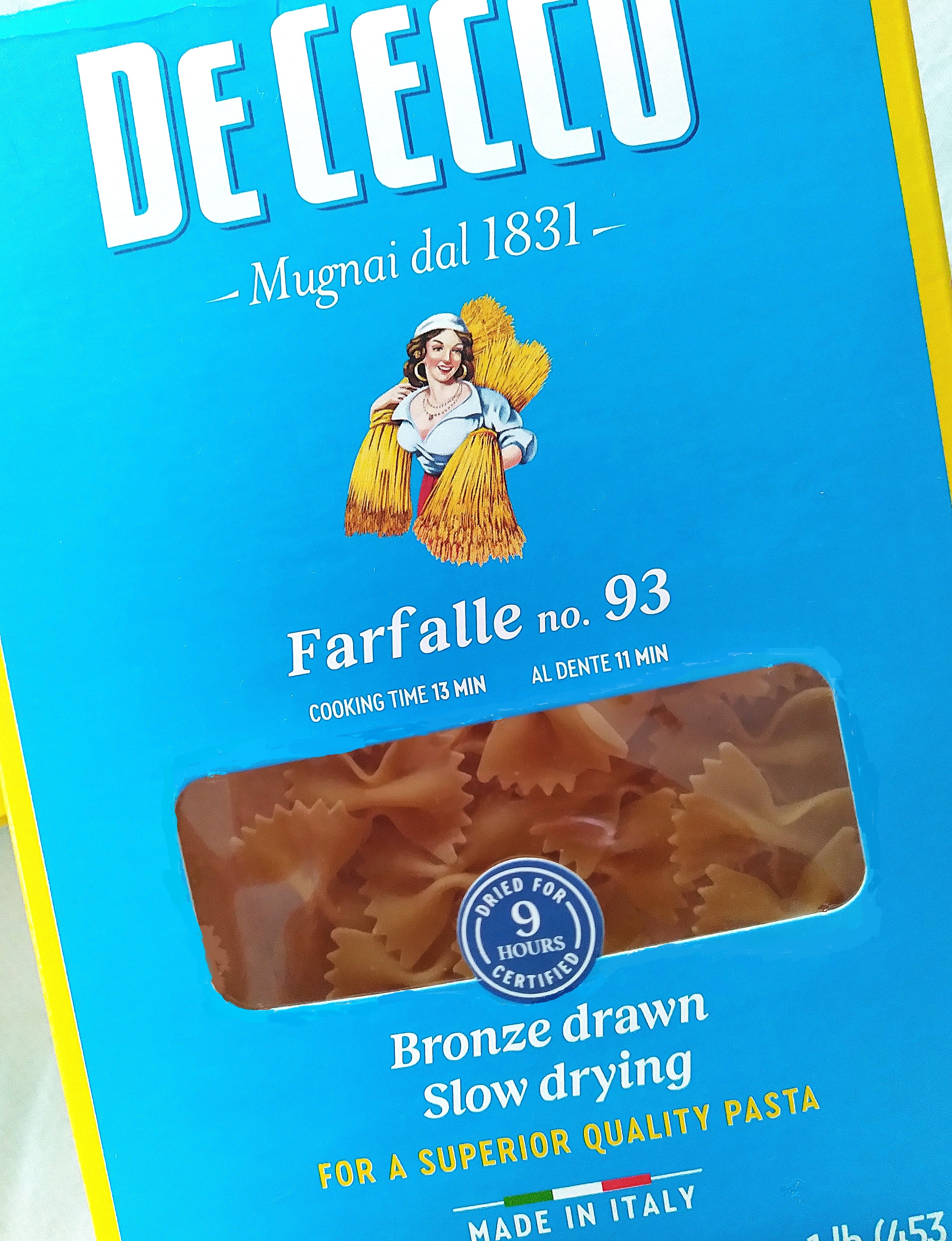







Recent Comments