Paulo the Patriot
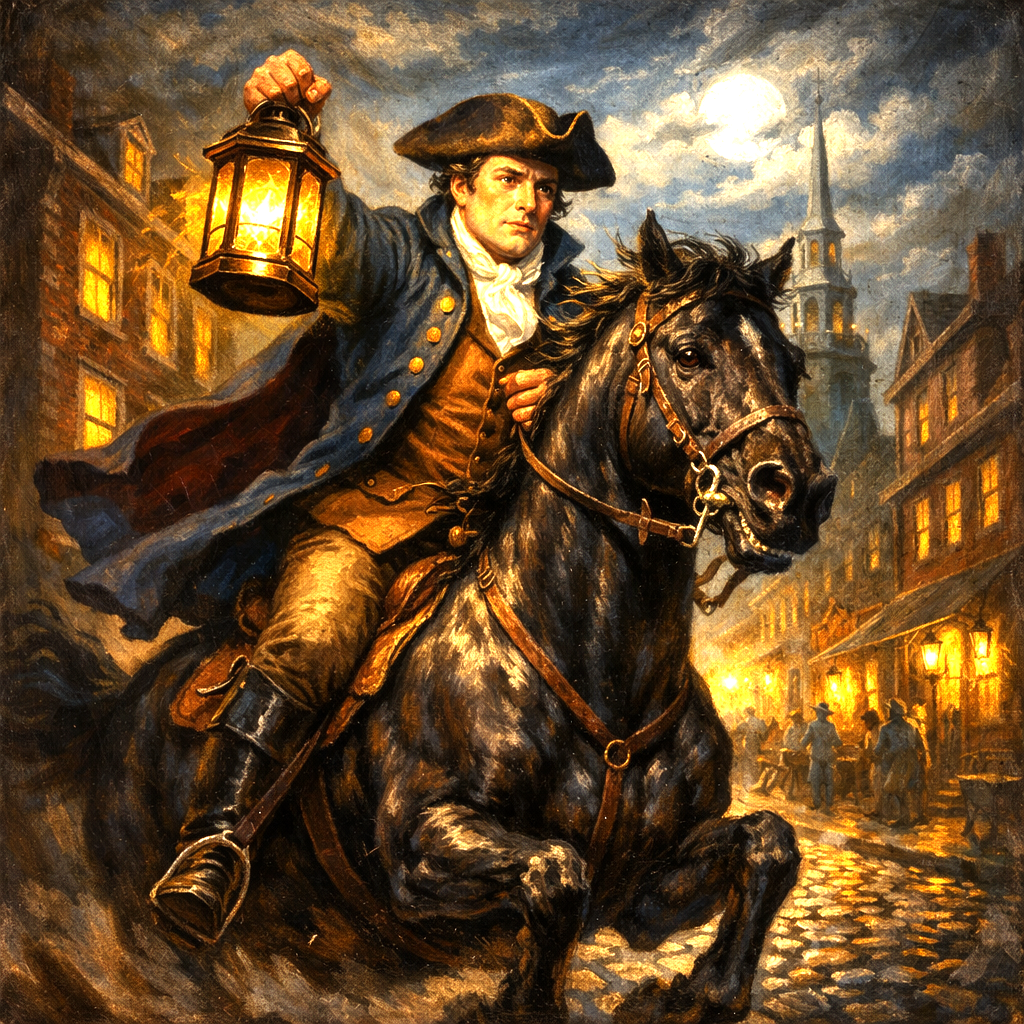
For a Chinaman or Sumerian, 250 years can go by like a heartbeat. That long ago, an amazing thing worth celebrating took place in the Independent Municipality of Concord Vine in southern Massachusetts. A fidgety gentleman of the name Paulo Riviera, lantern held high, rode his black stallion by night down the cobblestones, shouting “The British are coming! The British are coming!”
Sure as foretold, by next morning a delegation from the Royal Assessor entered the rather crabby confines of the village and called to meeting the burghers thereof.
“Wine and ale shipments leaving the Port of Boston are to be further excised to finance the war on the Continent,” exclaimed Adolphus Middlemarch on behalf of King George, holding his wig atop his balding pate with a palsied hand.
“Aye, but not bloody likely!” slurred the same slovenly-dressed Paulo, now smelling markedly of gin. Cravat askew, his clothing in disarray, he pushed through the assembly and bumped up against the magistrate. “Haven’ you read the pamphlet which I have written titled Common As Dirt?” he demanded.
“Who is this man?” howled Adolphus, deeply offended.
“Don’t pay him no mind, he’s the town drunk!” explained Hiram Walker, the mayor, apologetically. “We put up with him ‘cause he’s an excellent blacksmith. Does like the sauce, though, must be said.”
“All right then, now about these stamps,” exclaimed the magistrate, pushing aside the cantankerous smithy, who was promptly sequestered by a pair of redcoats.
“Hardly seems fair,” complained the townsfolk. “We’re right heavily taxed, as is.”
“Es una indignación,” insisted Paulo, swaying like a larch in a typhoon. “Have you tried Concord Vine’s signatura claret?” he added consolingly, under the needling of the redcoats.
Say whast man will, Paulo was a patriot, one whose backstory deserves mentioning on this Semiquincentennial. Loaned out as a boy to the pristine Slocum Plantation on Maryland’s Chesapeake Bay, it was the hope of Paulo’s Andalusian immigrant parents that by helping him learn a trade, they would ensure their son’s future. Which they did. Assistant to the plantation blacksmith, Paulo became an excellnt artisan. All might have gone well, save the Slocum family’s second daughter, a striver and mischievous lass who bedeviled the Young Man incessantly. “My braids require your steady hand!” she could declare on a humid August afternoon, appearing in the doorway of the smithy, while crickets chirped in the fields and thunderheads gathered on the horizon.
“I c’n shoe yo’ horse fo’ yo’,” invited the boy, climbing up the ladder into the hayloft behind her attractively swaying buttocks.
“Aren’t you the tease!” she giggled, her apple cheeks blushing red as a Macintosh.
“Here now!” he protested as one of her clawlike hands latched on to his britches and pulled him atop her. “Wayload!”
Protests to no avail, she had her way with him, leading to a life of sloth. Such was oft’ the fate of our young and obstreperous nation.
Also, pirates steered their frigates into the bay, rowed ashore their longboats and plundered the plantation. Not a born militiaman, young Paulo raced to the main house, drew a sword from the Slocum family arsenal and rushed an equally junior rapscallion among the stinking pirate horde. Poor Paulo got his butt sorely whipped by the mercenary intruders, while the Slocums sought refuge further up the bay at the estate of Geo. Washington and family in Westmoreland County.
Let this be a lesson to us! Although a fairly mundane part of Colonial life and ranked high in the history books, such doings steer not our daily discourse in the halls of Congress. Light a sparkler for freedom! Blow the state budget on fireworks.


Recent Comments