Conflicted
I live in Oxburg, Maryland. A local boy, I haunt the Lost Seagull Café. If you are hungry and drive far enough north on Rockville Pike, there it is, next to a Greek deli in a strip mall, one mile short of the broadcast antennas. Don’t let the Chekhovian name fool you, the café is Russian-Jewish. Nostalgia ain’t what it used to be, I miss the old days, thirty years ago, when Chevy Chase was one of the places in Maryland where you could pump quarters into a mechanical kiosk at the bus station and purchase an English-language edition of the Yiddish newspaper Forverts. Our synagogue even had a stack of free Russian-language newspapers parked by the door.
I drive a silver-colored 2004 Toyota Camry XLE with a moonroof. It has real leather seats in gray, a CD player and a stitched leather shift knob. A people’s car, Toyota must have sold half a million of them.
Pulling into the parking lot, I have to brake hard to avoid hitting a single lonely demonstrator, his sign proclaiming “Genocide is a Lie!”
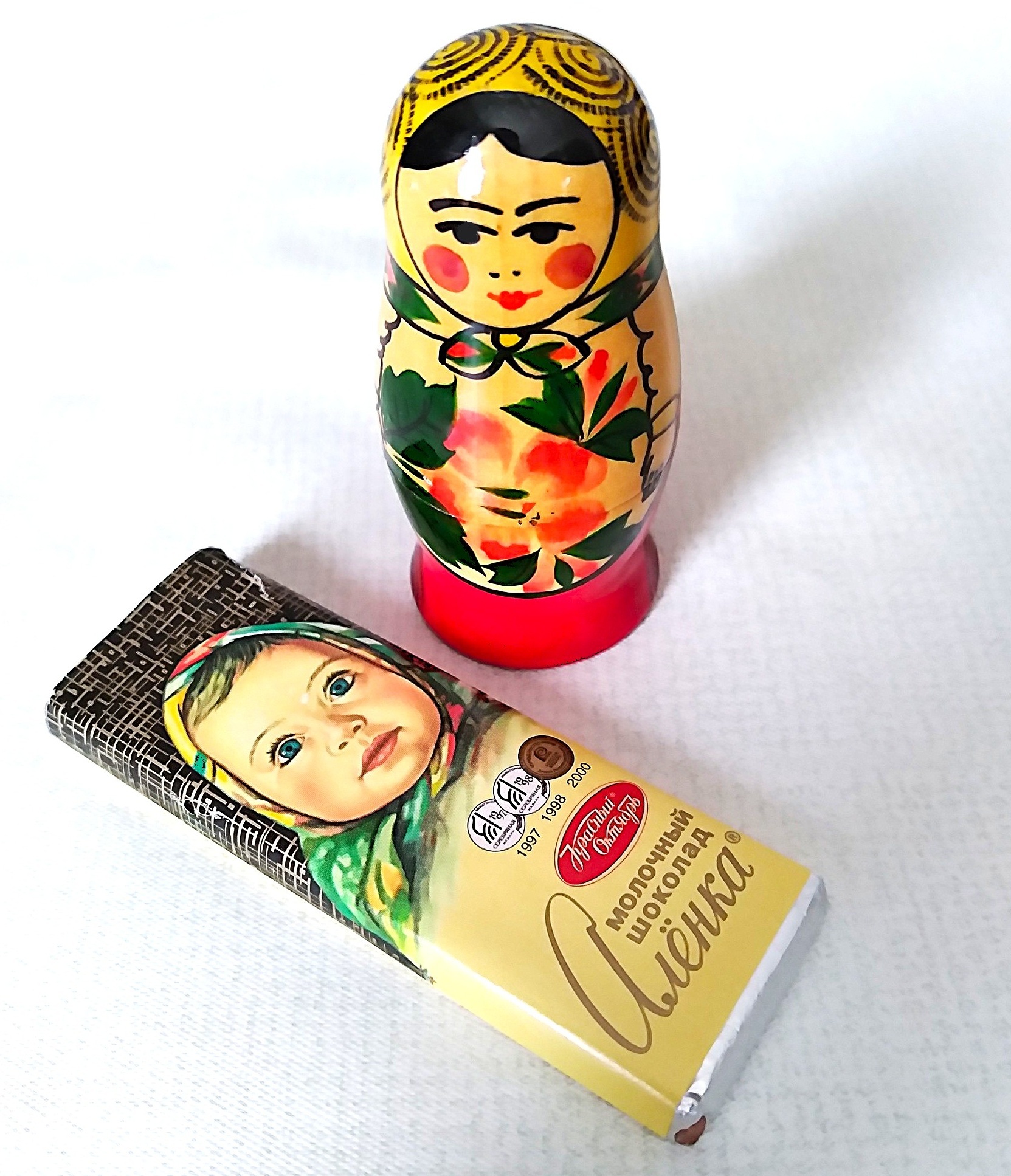
You walk into the Lost Seagull, the bell mounted atop the door goes tinkle, tinkle, thud! The staff is a handful of Russians, with accents from St. Petersburg, the Caucasus, Murmansk and Vladivostok. Their parents, Soviet refuseniks harassed by the KGB, left Russia to rid themselves of Moscow’s meddling. Atop the cash register, a sign in Hebrew lettering says Eydish geredt, “Yiddish Spoken.” And behind the register, a line of matryoshka nesting dolls alternates with Alenka brand Russian chocolate bars. Plaintive balalaika music plays in the background, but so softly, it’s virtually inaudible. The same cassette tape plays over and over 24/7. You need to travel to Maryland’s Eastern Shore to find anything quite this authentic.
I choose a smallish table near the back and order silver tea, which is boiling hot water for people arriving with their own teabag. I intend to leave a big tip, which is why they let me do this once a week. Nobody ever said that the water in Maryland tastes like wine.
I’m a music publisher for a Swedish rap band, a bedroom recluse trust fund babe in Chicago, a Calypso combo from Trinidad heavy on steel drums and 160 other equally desperate music artists. They create tracks in over two dozen genres, things like heavy metal dance music, country indie pop, jazz rapper funk, techno trance nu metal, Ladino punk rock, Latin sludge metal, electronic body trap, psychobilly aggrotech, unblack crust punk, beatdown microhouse, melodic brostep dream pop (think a male Katy Perry) and a host of other equally esoteric styles. You may not know how to describe it, but you’ll know it when you hear it. Music publishing is what I do.
We are online and off, Backpack Giant Music, LLP, a subsidiary of Large Egg Entertainment. (Previously Large White Eggs Entertainment, but modified to alleviate cringy references to white supremacists.) The music business requires constant prodding to get anything done, it’s not for the faint of heart, no one ever got rich hoping for a miracle. Let’s be clear, the songwriter owns the track. My job is to sell it, licensing songs to films, adverts and streaming media. I also defend ownership of the copyright. Preferably, a buyer will purchase an artist’s complete catalog, rather than a single hit song. His or her past, present and future output. Plastic pick to guitar strings, sticky fingers to piano keys, drumsticks to batter head, scratchy pencil to notebook paper, humming and strumming, music is born! Everybody in the publishing biz is looking for the next Taylor Swift, but — a unicorn in a haystack — it is difficult to find her. I am neither starving nor loaded. I make a living.
I share the business with Barry Guildenstern, who can trace his lineage all the way back to Shakespeare’s Hamlet. His specialty is club dance music, supplying tracks of electronica exclusive to his brand to DJ’s all over the planet. With a stable of computer nerds supplying endless product, Barry runs the biz as a subscription service, guaranteeing him a monthly income.
In the Stone Age, Barry and I were journalism students together at Moosegrave College. Recently, he decided to write a book titled Jews in the Music Business. When he went to do interviews, every music person hearing the title promptly threw him out on his ear. “Nobody wants to paint such a bull’s eye on his back, you klutz,” Saul Wasserman told him. Since the start of the war in Gaza, we Jews have become even more circumspect. “What, me Jewish?” I tell people. “Never heard of it! We’re Russian Orthodox and I have the liturgy to prove it. Payem paruski?” As for Israel, right or wrong, I support the homeland, but even I find the Israelis guilty of criminal negligence when it comes to October 7. How could they have let this happen??? AGAIN! I’m still smarting from losses in the 1973 war with Egypt.
To show solidarity with the Palestinians, I have been bedding a raven-haired young lady from Rafah named Sandra, a graduate of Al-Quds University. A pharmacist, she works behind the counter at the local drugstore in Oxburg. Equipped with a wicked laugh and coal-black eyes, she is amazingly seductive and only slightly crazy. As long as I bring her Greek halva, she lets me climb into her bed. A political refugee granted temporary, tentative asylum, her refugee status hanging by a thread, who knows what kind of bomb-throwing student activism got her on an IDF shit list? At first, I felt guilty, an older man taking advantage of a young person in dire straits, but Sandra didn’t seem to mind. Until the day she announced that she needed to send thousands of dollars to her family in Rafah and I should give her the money. “I don’t have thousands of dollars in disposable income,” I told her.
A typically devious A-hab, she had an entire game plan worked out. “Hold a rock revival,” she commanded. “AC/DC, John Mellancamp, George Thorogood, ZZ Top, Bon Jovi. You’ll never get rich if you don’t give the people what they want. My cousin wants to lease a trawler and outrun the Israeli blockade of Gaza. With the Israelis holding the Global Sumud Flotilla under a magnifying glass, the way is now open for independent actors to strike! You can finance it.”
“I’m not going to finance it. It sounds like a lot of shenanigans in the Middle East. You Philistines are all alike. I met Yasser Arafat when I worked at —”
“Borrow the money!”
“Arafat —”
“Mortgage your house.”
“Uh…”
Samson and Delilah, the Jew and the Philistine, Sandra is only slightly crazy. As stated.
Half the equation has to do with our current domicile. A dour Russian by temperament, I am always going to feel a little out of step with sunny, boisterous, cantankerous Americans in a country of immigrants where John Brown is white and John White is black.
Barry, my business partner, has it easier. His new book is titled Zoroastrianism For Dummies. He hopes to get it published soon.
At the Lost Seagull, I eye the laminated Rosetta Stone of a menu, its items listed in Russian, Yiddish and Henglish. Across the top, in a cursive font, amidst a spray of flowers, a heading announces in English “Everything fresh daily.” There are maybe 20 items on the menu. Pirogi. French toast. Chicken Kiev. Blintzes. Apple strudel. Potato pancakes. Rugelach. Pickled pig’s feet. The margins of the menu are decorated with semi-erotic doodles, supposedly drawn by Marc Chagall. (Who knows? We weren’t there.)
I don’t want to say too much about politics during this sensitive period, but a shout-out is in order to Olga and Maxim who own and run the café. In interior décor, they don’t shy away from the 74 years of Soviet rule, but neither do they make a fetish of it. The occasional hammer and sickle grace the walls, but most often as part of something bigger, a portrait of Lenin, a black and white photo enlargement of a May Day parade from the 1950’s or a colorful and dramatic painting of the storming of the Winter Palace. Their family and mine share both the honor and the burden of Menshevik forebears. Social Democrats, our families chose the notoriously wrong side of history, ending up in Siberia and, later, Sweden, Israel and America. In Sweden, Yiddish is an official minority language.
It was that prick Vladimir Lenin who in 1903 coined the terminology Bolshevik (“the majority”) and Menshevik (“the minority”), nefariously distorting reality by claiming more popular support for his aggressive, aggrieved wing of the Social Democrats than he actually possessed. Lacking modern day polling, popularity was whatever he said it was.
And in spite of choosing the wrong side, we Feingolds haven’t done too badly. Before decamping to Australia, my South African cousins owned gold mines.
The café is filling up. “So what are you, a recluse, a bum?” demands Morrie Merlin from a large, round table in the center of the room. He is dressed like a Talmudic scholar in a boxy suit jacket in Hasidic black, baggy pants and an ancient tartan sweater. His beard is flecked with gray. A woven, beaded kippah on his balding pate, he waves me over. “You join our coffee klatsch,” he exclaims, “we offer you a special introductory rate. You pick up the tab three weeks in a row, then you are one of us.”
In addition to Morrie, there is also from my synagogue Professor Yuri Orlov who functions in Washington, DC as a shaliach, an emissary representing the Land of Israel before the multitudes. Apparently, this pays the rent. Also present at the table is Haim Shampoo. Haim is someone I know. Clean-shaven, with hollow cheeks and bloodshot eyes, he’s thin as a reed and blows the shofar on High Holy Days. People say he is CIA, but I wonder what his family name was before they changed it to Shampoo? A collection of old geezers, this gang seems to have oodles of time to loaf in the middle of the day.
The pretty waitress brings us blini and strawberries on a tray. I am salivating on the tablecloth. She is short, with a compact little body. Dressed in white, a silver cross on a chain nestles upon her ample breast. She has plucked eyebrows and flaxen hair tied up in a bun. As she plunks each dish onto the table — plunk! plunk! — there transpires a long, raucous discussion in Russian about which delicacies are fresh daily. My Russian ain’t that great, but I am led to understand that the chefs have been slaving away since 4 a.m. and “Everything is guaranteed fresh daily,” yada yada yada.
When my mamele, my mom Rosa, still walked among us, she spent her days in the kitchen with the TV tuned to RT, a channel which began its existence as “Russia Today.” They had a parade of gorgeous blond anchorwomen bitching endlessly about the evils of American capitalism. When I pointed out that their content verged on total propaganda, mom replied, “Sure! I know that, but I make allowances.” By the end of his career, even Larry King was broadcasting on RT. After becoming an ever more strident mouthpiece for the Kremlin, however, RT got banned by the U.S. Government.
Once we have enjoyed the blini and some potato pancakes in applesauce, we eat borscht. Beets and sour cream. Morrie is busy nattering in my ear, one hand on my shoulder like a crab’s claw. Here’s the deal: He and his crew are fundraising for starving Russian Jews living like peasants in small towns and villages back home in Rossiya. The recipients are in Russia, but this being a registered American charity — The Potemkin Kropotkin Undergarment Foundation — smart lawyers have found a way for the yearly Required Minimum Distribution from my IRA to be paid directly into their coffers. Money makes the world go ’round. “We have a website online,” Morrie assures me, waving his phone in my face, “but for us, vos iz dos far a mishegoss?” he says in Yiddish.“What is this for craziness? Give me traditional fundraising, where you can still smell the mop sweat.”
I keep expecting him to break into melodious Russian, but apparently he feels at home with work-a-day English and the Yiddish of Hester Street, the pushcarts and New York’s Lower East Side. Maybe Yiddish is making a comeback among Millennials, but that’s not us. If Jews have a head start in life, it’s not that we are smarter than other people, it’s that we are the People of the Book and multi-lingual.
“Excuse me for asking, but how did you manage to register a 501(c)(3) charity with such an outlandish name?”
“Ah,” Morrie smiles, showing blackened teeth. “That is a story worth telling. We went into the IRS office and told the lady behind the counter, ‘Listen, this wild moniker shows that we have nothing to hide and that we are legit. We know this name is crazy, meshuggah, but historically, Grigory Potemkin and Peter Kropotkin were the greatest men of their era, so we celebrate their achievements. My Bubbe belonged to the International Ladies Garment Workers Union. The I.L.G.W.U. As we say in Yiddish, “If my grandmother had balls, she would have been my grandfather.” If it’s in the name, there’s a reason why it is in the name!’ That spiel convinced the tax lady that we knew what we were doing,” he cackles. Pausing, he nibbles on a pastry. It sits like a brown stone in his incredibly gnarled hand. Either he has arthritis or he is 100 years old. “We take multiples of 18,” he proposes. I get it, $18, $36, $54, $72… Eighteen is chai in Hebrew which means “life” or good luck.
“I understand your philanthropic activity here in the States,” I remark, “but does any of the money make its way across the water to Ukraine?” Actually, I mean “Russia,” of course, but I can’t very well say “charity to Russia” at this time in a public setting in America. I would get pummeled with stones, drawn and quartered, burned at the stake. Thank you very much, Vladimir Putin. It’s not just that he wants to annex Ukraine. A former KGB agent, Putin wants to reconstitute the entire Soviet empire. He says as much in his speeches.
Sighing to beat the band, Morrie gives me a verbal mission statement: “We have high overheads and low ratings, this is undeniable. If a squeaky clean 2% in revenue reaches the worthy recipients, I feel it is all in a month’s woik. Our mission is tikkun olam, heal the world. We try. We woik four-hour days, three days a week. Twice that much on Sunday. Do I criticize you? No, I do not. Charity Navigator, CharityWatch and BB Gun Wiseguy Giving Alliance, these organizations that rate charities should be of themselves ashamed. It’s all politics and who you know. We contacted one such organization, openly and without embarrassment. I wondered how much, under the table, I should provide to get a pristine rating. Nu? If someone is getting it, someone is paying it. I don’t see any ratings bureaucrat standing in line at no soup kitchen. The young man hung up the phone! What a schmuck, I tell you. Yemach shemo, may his name be blotted out.”
“You want money, make me a bizness proposition,” I suggest, waving away an errant housefly that’s been divebombing the pastries. “I manage a rap band. What can you offer me musically?” I demand, purposely acting rude, since I feel I am being taken for a ride. My tea has grown cold in the cup. “Eeny meeny blini,” I complain. “Where’s the bourbon smash bar? Where are the go-go girls scantily clad in cowboy apparel?”
“Klezmer music,” he ventures. “Name the band Hamas. You’ll get boatloads of free publicity.”
“I hate klezmer music.”
“You can be influencers,” Haim suggests, swaying excitedly in his chair, shining as bright as a 60-watt bulb. “Online, every 24 hours is the start of a brand new day! With a band named Hamas, you can run a disinformatzia campaign. Blame October 7 on sleeper cells left over by Osama bin Laden. Blame Covid on drug traffickers from Venezuela. Demand a Congressional hearing!”
“Thanks, but not in my lifetime.”
“Gib mir your pen,” Morrie insists. On a paper napkin, he writes “polar bear, pivo, pajamas, pfft.” Handing me this geheimnisvoll document, he explains, “A secret word code I use at my bank. I prostrate myself before you. Let no secrets come between us!”
I groan aloud. “realPfft is the name of a rap band I represent,” I point out.
“That and tsvey dollar gets you mandel bread at the bakery counter,” he rumbles, hoping I’ll treat him. “What we do, we do to alleviate the suffering of the oppressed,” he declares and I get an itchy feeling in my boots that Bible-thumping is also part of his repertoire. “What kind of Jew are you, not to help your co-religionists?” he growls, furrowing his brow menacingly like an old-time prophet. “Isaiah 41:10, ‘Do not fear, for I am with you. Do not be dismayed, for I am your God. I will strengthen you and help you. I will uphold you with my righteous right hand.’ You gotta earn all that! Remember Job. ‘The Lord giveth and the Lord taketh away. He who…’ whatever!” A born salesman, when all else fails, Morrie is trying the biblical approach, to shame me into making a contribution. Except, he’s panting and I’ve heard it all a thousand times before, Ethiopian Jews in Gondar, Armenian Jews, Jewish ladies in South America forced into prostitution, needy South African Jews, needy North African Jews, Friends of the IDF, Friends of the Magen David Adom Israeli Red Cross, the Hadassah women’s organization, synagogues in Prague, the Jews of Moldova, Jewish braille, Yiddish books. An accountant clever at tax deductions, my momma Rosa gave to thirty different Jewish charities. We kids used to say, “Isn’t it fantastic what an $18 contribution can do? According to these appeals, without mom’s money, the world itself will go under!”
I’m not a judge on The Voice, but dealing all day long with bad singers singing lame songs, I have developed a good ear and a jaundiced view of what comes out of people’s mouths. It’s an occupational hazard. I judge not only what people say, but how they say it. So far, Morrie has only reached 2 on the Richter Scale. “By relieving their bitter agony, you too shall dwell in the House of the Lord for all eternity,” he promises me. Is that all? Muslims promise that 72 vestal virgins await martyrs in paradise. “Your tax deductible contribution will be a wise, noble and lofty undertaking,” Morrie all but thunders, banging his hand on the table for emphasis. “I will swear with my right hand on the cover of a pornographic magazine regarding the righteousness of our cause. Truth, justice, mercy,” he mutters.
“Kevin’s being difficult,” Haim chimes in. “Show him the brochure,” as if this will quiet my misgivings.
Eyeing me stolidly like I am fresh roadkill, Morrie reaches inside his jacket and pulls out a well-thumbed four-color pamphlet. He throws it down on the table dramatically. On the cover is a photograph of some futuristic-looking building.
“Smells like something out of a bad sci-fi movie,” I suggest.
“Our research institute in Kazakhstan,” Haim chirps proudly. “Within spitting distance of the Baikonur Cosmodrome. Ever been to Alma-Ata? Tashkent? Ever ride a camel on the Silk Road? You can hitch a ride to Mars.”
“Has anybody actually been to this institute of yours?”
“What? You expect us to go all the way to Kazakhstan just to inspect a building?” gripes Haim. “Go sit at another table!”
“Make a virtual tour of the facility,” I suggest. “I assume that your institute is where mad scientists are using A.I. to create the next golem and end all life on Earth,” I joke. The pamphlet’s text is in Russian and I can’t be bothered to translate it. Waving for the waitress, I tell her that I’ll cover the tab for the entire table. I am pretty sore, this has not been my idea of a relaxing afternoon.
History’s wheel is turning and, like it or not, we are part of a major churn. Olena, the new teller at my bank, is a refugee from Ukraine. Slava Ukraini, I keep expecting her to give me change in Ukrainian hryvnia.
“You don’t like what we have on offer?” Morrie asks, leaning to within an inch of my nose, a last desperate lunge at a solution. “Hokay! Instead, we have a virtually flawless plan to stop Sweden’s Greta Thunberg and her Turkish friends in Greenpeace from outrunning the blockade of Gaza.”
“Greenpeace isn’t trying to outrun the blockade of Gaza. The Global Sumud Flotilla —”
“We need a hundred million dollars or so to get an American destroyer located in James River, Virginia out of mothballs! Steam engine tech don’t come cheap.”
“Not my problemo.”
Obviously, we have all been reading the same newspaper stories about blockade runners.
Paying the bill, I don’t say goodbye, I just leave.
In the parking lot, where the cars are lined up in a row facing the building, four masked individuals in black combat gear surround me as I put my key in the car door. I gotta laugh. “No, really?” I demand. “Don’t tell me you’re from ICE?! I don’t even speak Spanish.”
“You got any identification?” an agent asks gruffly.
Pulling out my wallet, I proffer them my driver’s license and Medicare card. Oy vey is mir,” I laugh. “No hablo español.”
It turns out they tagged my car but misread the license plate. Same number, wrong state. “Not a big deal,” I assure them. “Anybody can make a mistake. Have a nice day.”
Halfway home, I have to pull over to the side of the road and puke. I am trembling with rage. I try so hard to be nice, but this country is rapidly going downhill. We’re in the midst of a government shutdown, but law enforcement still has the resources to hassle people.
Conflicts here, conflicts there, conflicts everywhere. This is so not good.
-/-



Recent Comments